Zakouma and Salamat
3,000 km² of woodlands and floodplains in southeastern Chad, 600 elephants, Kordofan giraffes and crowned crane gatherings from December to mid-April.
Zakouma National Park spans 3,054 km² in southeastern Chad, in the Salamat region, roughly 800 km by road from N'Djamena. It is a mosaic of acacia-dotted savannas, floodplains fed by the Bahr Salamat basin, and clay pans that hold water long after the rains. This particular hydrology explains everything: as the dry season advances, wildlife concentrates around residual water points, and the park becomes one of the densest observation sites in Central Africa.
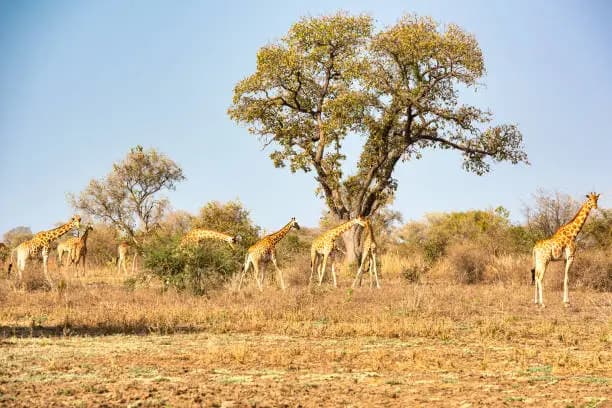
Zakouma's recent history is one of rescue. Between 2002 and 2010, industrial poaching reduced the elephant population from 4,000 to fewer than 450 individuals. Since 2010, management has been entrusted to African Parks in partnership with the Chadian government. Poaching losses have become marginal, the herd has grown to around 600 individuals, and numerous young calves are visible again, something unseen for years. This recovered stability has enabled the return of complete wildlife: lions of the West African group, Kordofan giraffes—Zakouma shelters one of the world's largest remaining populations—buffalo herds numbering several hundred, hippotraguses, topi antelope, Defassa waterbuck, Derby eland toward the margins.
Ornithology holds a special place here. Over 380 species are recorded. In March, gatherings of crowned cranes on the Rigueik plains number in the thousands, mixed with white pelicans, marabous, Senegal jabirus and African spoonbills. Raptors are abundant: martial eagles, Bearded Vultures, Rüppell's vultures. For those interested in birds, it is terrain that alone justifies the journey.
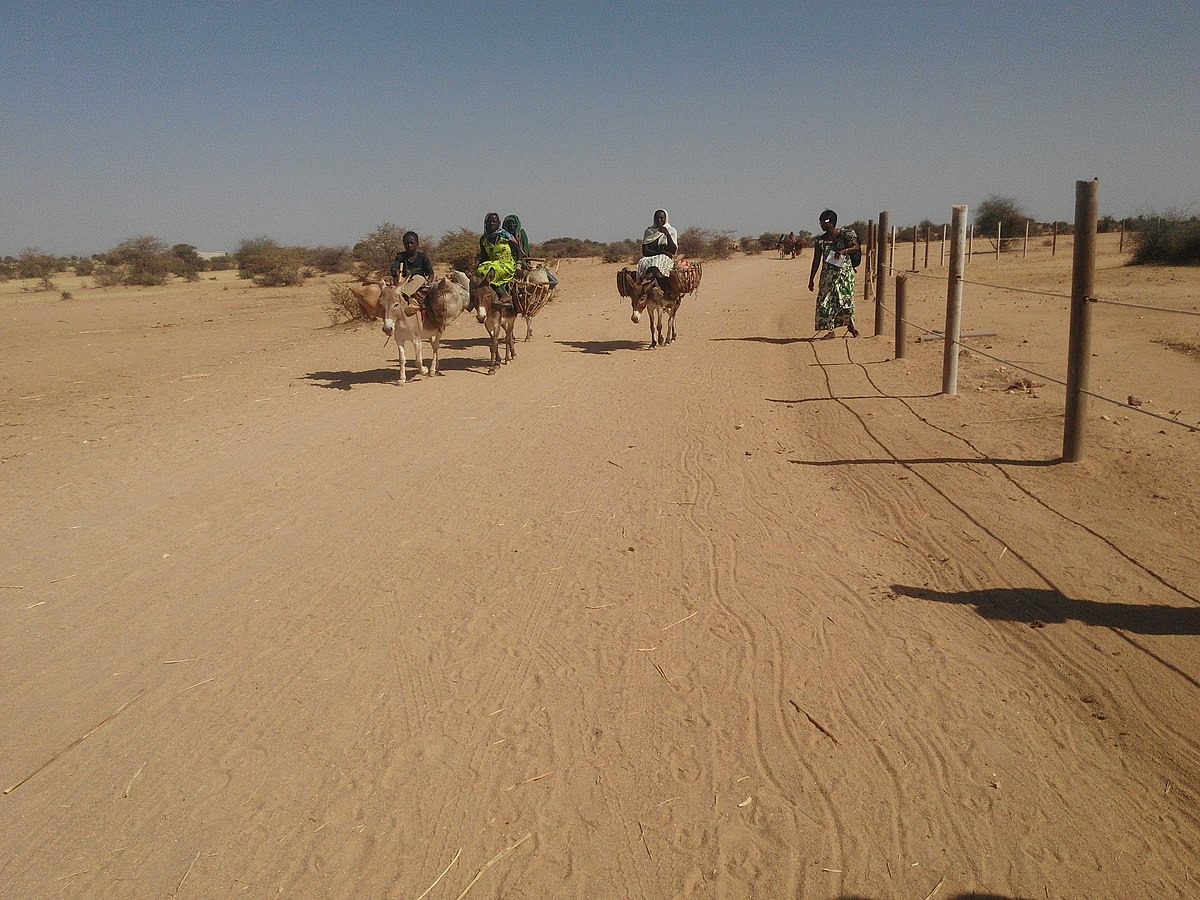
Around the park, the Salamat region is populated mainly by Arab Salamat pastoralists herding zebu, Sara farmers, and a few Fulani communities. Am Timan, the regional capital 90 km from the park, is a bustling mud-brick trading town with a lively market. Villages bordering Zakouma live from millet, sorghum, fishing in seasonal ponds and some livestock rearing. The park today employs several hundred people locally, which has profoundly shifted how communities relate to conservation.
The rhythm of a stay follows water. On arrival in December, the plains are still green, wildlife dispersed, tracks sometimes difficult. In February–March, animal concentrations reach their maximum, thermometers climb to 38–40 °C during the day. From mid-April onward, the first rains render tracks impassable and the park closes until the following season. This short window, four months a year, makes Zakouma a destination requiring long-advance planning.
Must-see
Zakouma's elephants in March. The large herd of 600 individuals moves in compact formation across the Rigueik and Tinga plains. Approach is on foot with a ranger, at respectful distance.
Camp Nomade beneath the acacias. Mobile camp struck and reinstalled each year, set near an active water point. Spacious safari tents, wood-fired hot showers, dinners by oil lamp, outings on foot from dawn.
Kordofan giraffes. A subspecies now rare elsewhere in Africa, here visible daily in small groups within the open acacia zones around Tinga.
Water bird concentrations. On the residual ponds of Rigueik in February–March, thousands of crowned cranes, pelicans, African spoonbills and marabous gathered at the same water point at dusk.
Am Timan market. 90 km from the park, weekly market where Arab Salamat herders, Sudanese merchants and Sara farmers converge. Good waypoint on the return route to N'Djamena.
When to go
The park's opening window runs from mid-December to mid-April; the rest of the year tracks are impassable and facilities closed. In December and January, temperatures are most temperate—18 °C at night and 30–32 °C by day—with vegetation still green and wildlife dispersed. February marks the transition: wildlife begins concentrating around water points, the climate remains pleasant.
March is the densest observation period, with large elephant concentrations and bird gatherings, but also the hottest, 38–40 °C during the day, nights around 22 °C. Early April sees heat intensifying before the first rains, and the park closes once tracks turn muddy, typically around the 15th. For a first visit, we recommend the latter half of February or the first half of March—a good balance between wildlife density and manageable temperatures.
Practical advice
Budget a minimum of three full days in the park, ideally four, to alternate early-morning outings, return to camp during hot hours, and late-afternoon sorties. Fewer than three days does not justify the logistics of access. The recommended route is by charter flight from N'Djamena, approximately 2 hours of flight to the Zakouma strip, operated seasonally by African Parks. Road access is possible but requires two full days of track from the capital, best reserved for travelers intent on crossing the country.
Accommodation is at Tinga Camp, a solid lodge with bungalows and pool, open year-round, or Camp Nomade, a luxury mobile camp open February through April. Zakouma combines well with Ennedi for a 12–15 day journey covering both savanna wildlife and Saharan landscapes—our most frequent recommendation. A shorter combination is possible with Lake Chad and Kanem for 8–10 days. The destination suits naturalist travelers, ornithologists, wildlife photographers and safari enthusiasts seeking paths beyond East Africa. Comfort levels are solid in both lodges, but the country remains demanding terrain: heat, tracks, limited infrastructure outside the park.