Emi Koussi
Emi Koussi
A shield volcano in the Tibesti massif rising to 3,415 m, Emi Koussi is the Sahara's highest summit. Itinerary, caldera, Erra Kohor and practical information.
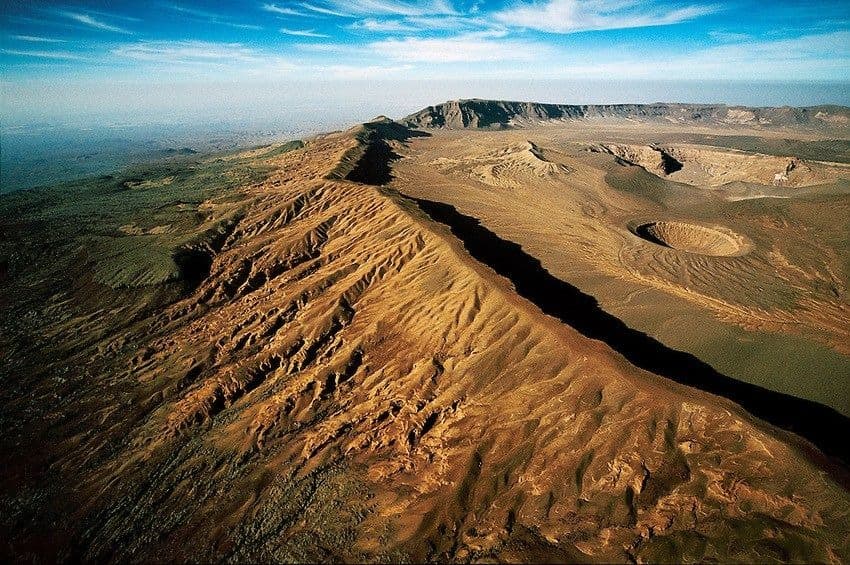
Emi Koussi is Chad's and the Sahara's highest point, standing at 3,415 m elevation. This shield volcano dominates the southern reaches of the Tibesti massif and harbors at its summit a vast caldera from which opens the Erra Kohor crater. Its ascent, lengthy yet technically accessible, traverses tassilis, dunes, gueltas and volcanic terrain in the company of the Toubous, Saharo-Sahelian pastoralists who know these heights better than anyone.
Why climb Emi Koussi
Emi Koussi's appeal lies in the combination of three rare elements: a Saharan summit exceeding 3,400 m, an active volcanic caldera until a geologically recent period, and a preserved Toubou human and cultural environment. The volcano is today considered extinct; its final eruption produced three maars, and the basaltic flows emitted from cinder cones spread across the caldera and down its flanks. The hot springs of Yi-Yerra, on the southern flank at 850 m elevation, constitute the sole remnant of apparent geothermal activity.
The landscapes chain together dunes, sandstone cornices, rock paintings and caldera panoramas. The trek remains long: endurance, rather than technical skill, determines expedition success.
History and first ascents
Emi Koussi has long been known to Toubou populations, who notably exploit its natron. The first ascents documented by Europeans date to 1915: French troops under Captain Lauzanne reach the summit in May, followed in September by the expedition of Colonel Tilho, a geodesist. British explorers continue reconnaissance in 1938 and again in 1957, among them travel writer Wilfred Thesiger. These expeditions contributed to mapping the caldera and refining the summit's altitude.
What to see on the volcano
The caldera and Erra Kohor crater
At the center of the summit caldera opens the Erra Kohor, a crater of roughly 12 km diameter. Four passages allow descent into it: Yono, Miski, Modiounga and I Yera. At the bottom, a white patch marks a natron deposit (sodium carbonate), extracted by Toubous for traditional uses. Weather permitting logistics, descending to the crater floor offers another sense of the site's scale.
Taïtaï Pass and the summit
From the caldera, the Taïtaï Pass leads to a trachyte promontory marking the highest point at 3,415 m. The view encompasses the entire caldera and, in clear weather, neighboring Tibesti reliefs.
The hot springs of Yi-Yerra
On the descent, the oasis and hot springs of Yi-Yerra, nestled in the gorges of the southern flank, offer a welcome rest after several days of climbing.
Caves and rock paintings
Along the approach route, the cave of Tigui Cocoïna preserves rock paintings testifying to ancient settlement of the massif, when the Sahara enjoyed a more humid climate.
Itinerary and practical information
The expedition unfolds in several stages, alternating 4x4 vehicle, trekking and camel caravan:
- Faya Largeau: logistical starting point, an oasis town in Borkou.
- Isky village: first tassilis come into view.
- Nada bivouac: rocky cornices.
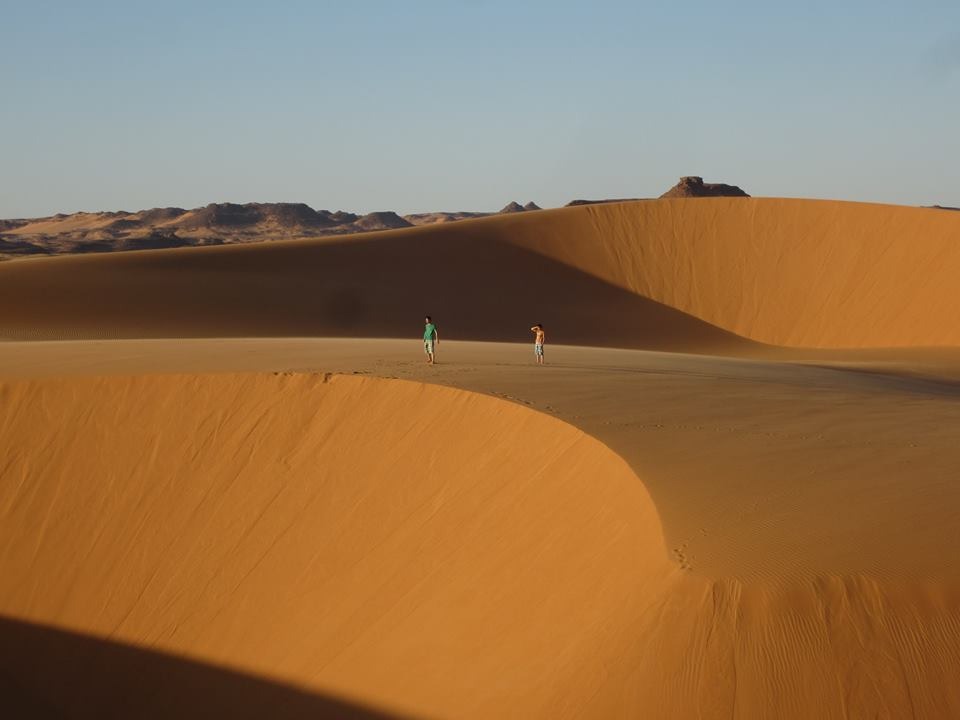
- Ourty Koussi dune: end of vehicular section, beginning of trekking.
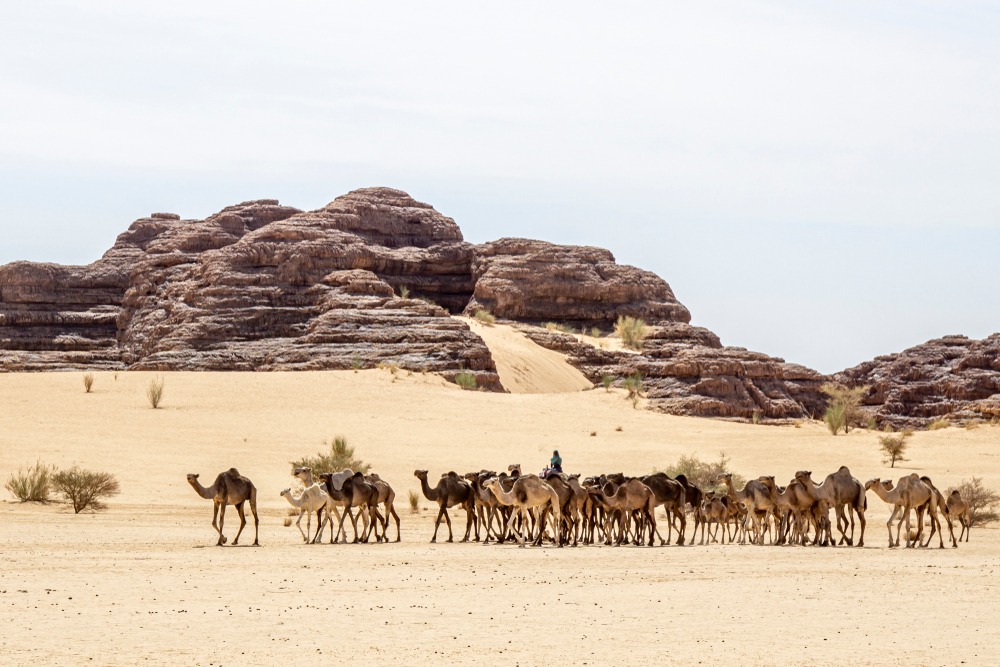
- Tigui Piton bivouac: relay point where baggage transfers to mountain dromedaries.
- Tigui Cocoïna cave then Mouzri guelta: cultural stage and water source.
- Proper ascent, several days of trekking on gentle slopes.
Guidance by Toubou guides is essential, both for terrain knowledge and for mediation with local communities. Plan for two to three weeks generally for a complete expedition from N'Djamena.
Security: the Tibesti is classified as an area of caution by most consular authorities due to security risks (presence of armed groups, smuggling, anti-personnel mines in some sectors). Any expedition must be organized through an experienced local operator, with official permits, escort if required, and updated awareness of the situation.
When to go
The favorable window extends from November to March, during Saharan winter: manageable daytime temperatures, cold nights at altitude (prepare equipment for below-zero at the summit). Outside this period, heat makes crossing plateaus and the ascent scarcely practicable.
How to get there
Access is via Faya Largeau, approximately 790 km northeast of N'Djamena. Two options:
- Domestic flight to Faya Largeau airport, the fastest solution but with limited frequency.
- Road connection by 4x4 from N'Djamena, several days of track, to be arranged with an agency.
From Faya Largeau, the expedition continues by 4x4 convoy to Ourty Koussi dune, then on foot with mountain dromedary caravan for logistics.
To see in the region
Northern and eastern Chad concentrate other major Saharan sites, often combined with Emi Koussi on longer circuits:
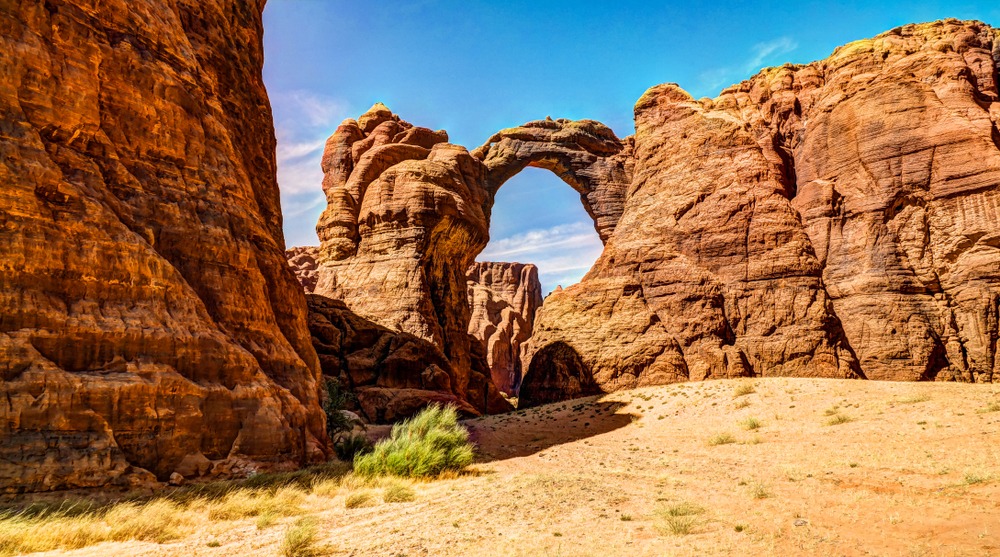
- Ennedi Plateau: sandstone labyrinth with monumental arches, UNESCO-listed.
- Guelta d'Archei: canyon harboring one of the Sahara's last crocodile populations.
- Ounianga Lakes: ensemble of permanent Saharan lakes, also UNESCO-inscribed.
Frequently asked questions
Frequently asked questions
The summit reaches 3,415 m, making it the highest point in Chad and the Sahara.
No, the shield volcano's slopes remain gentle. Difficulty stems from trek duration, heat, altitude and logistical remoteness, rather than technical passages.
The region is classified as a risk area by most consular authorities. An expedition is only feasible with an authorized local operator, proper permits and a security situation judged stable at departure.
November to March. Saharan winter brings mild days and cold nights, conditions suited to prolonged effort.
The Toubous are Tibesti's Saharo-Sahelian pastoralists, recognizable by their colored tagelmust. They serve as guides and cameliers on all climbing itineraries.
Plan for two to three weeks generally from N'Djamena, including road logistics, caravan and the ascent itself.
Preparing your trip
Climbing Emi Koussi forms part of a lengthy Saharan expedition, to be organized with a Chad specialist operator. To build your itinerary and combine it with other northern sites, consult our Chad travel page.
Interested in this visit?
We can include it in your personalised itinerary.