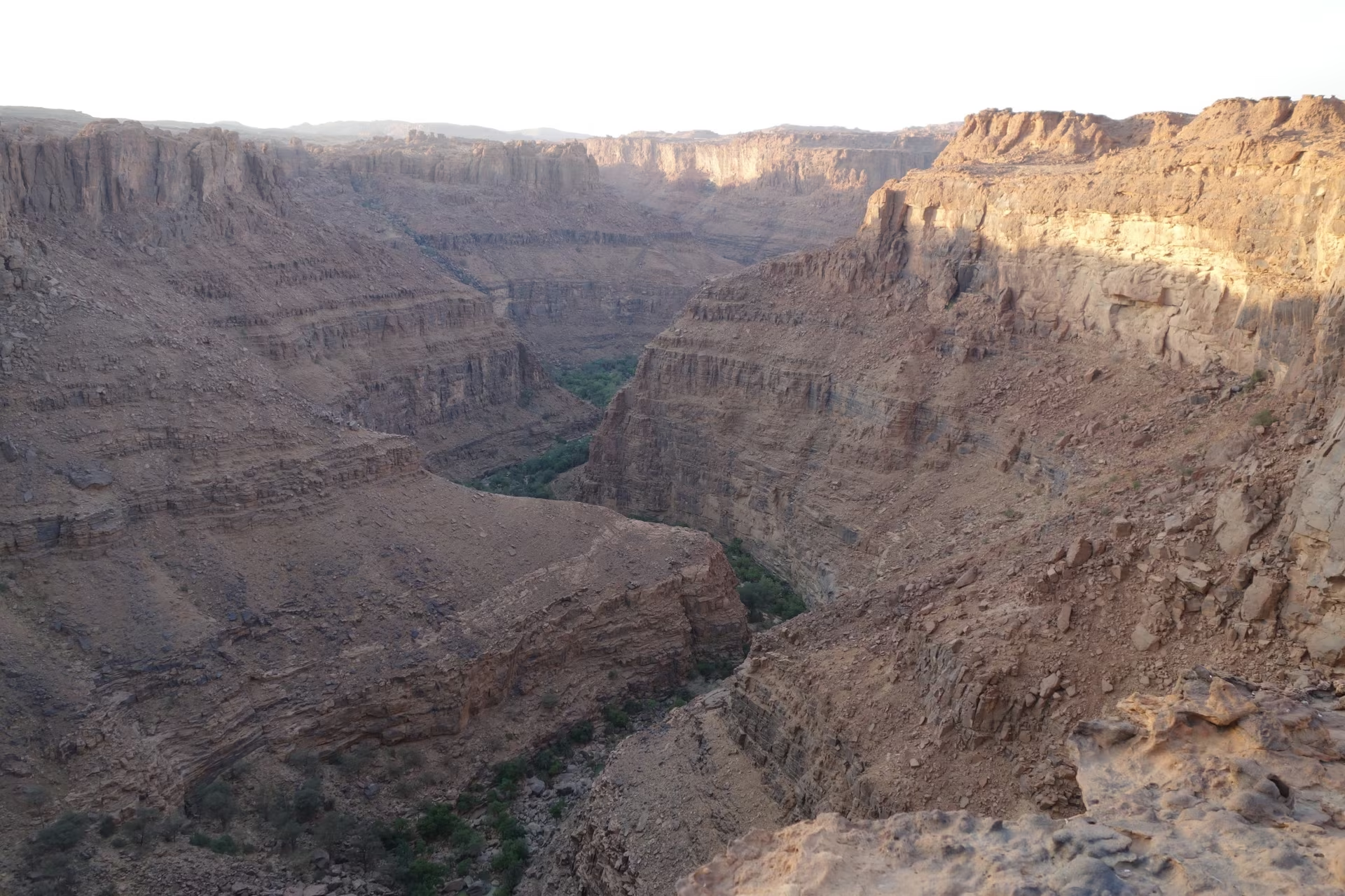
The Koboué Sinkhole, an Expedition at the Origin of a World
At the heart of the Ennedi plateau, nine days of camel trekking lead to the Koboué chasm, a 400-meter vertical canyon.
Duration
23 days
Ideal seasons
Jan, Feb, Mar, Nov, Dec
Style
Expeditions
Comfort
rustique
Travelers
Solo, With friends, groupe
The spirit of travel
Set off on a tour of Chad, between desert landscapes, oases, rock formations and encounters with local populations. Throughout this journey, you alternate between desert excursions, wildlife observation, swimming in gueltas, walks along lakes and dune climbing. This adventure, punctuated by long journeys across vast expanses, begins with approximately 11 hours of driving to Abéché, with a discovery of the Guéra region. You then continue your itinerary across the vast spaces of the Sahara towards Bachikélé, Aloba and Tokouloula.
Your exploration of the Ennedi massif leads you to Toukou, the Grand Riparo, the Archeï guelta, Ohio, Chéro, Herero, Maya and the Koboué chasm. The latter offers you the opportunity to gain height to admire the surrounding landscapes and observe discreet wildlife. After crossing the Werta gorges, you continue your journey towards Tebi, the Mourdi dunes, Démi and the Téguédeï salt flats, before discovering the Ounianga Sérir lakes, nestled in the heart of the desert.
The rest of your journey holds new discoveries at Fada and Gaora Halagana, before reaching Kalaït, a town known for its sandstorms. You then cross the transition landscapes between the Sahara and the Sahel to reach Bata'n Djéné, then Moussoro, where you approach the lifestyle of nomadic populations. Between bivouacs in the open air, geological discoveries and human encounters, this journey to Chad invites you to explore the different facets of the desert and Sahelian life.
The stages of your journey
Highlights
Day-by-day itinerary
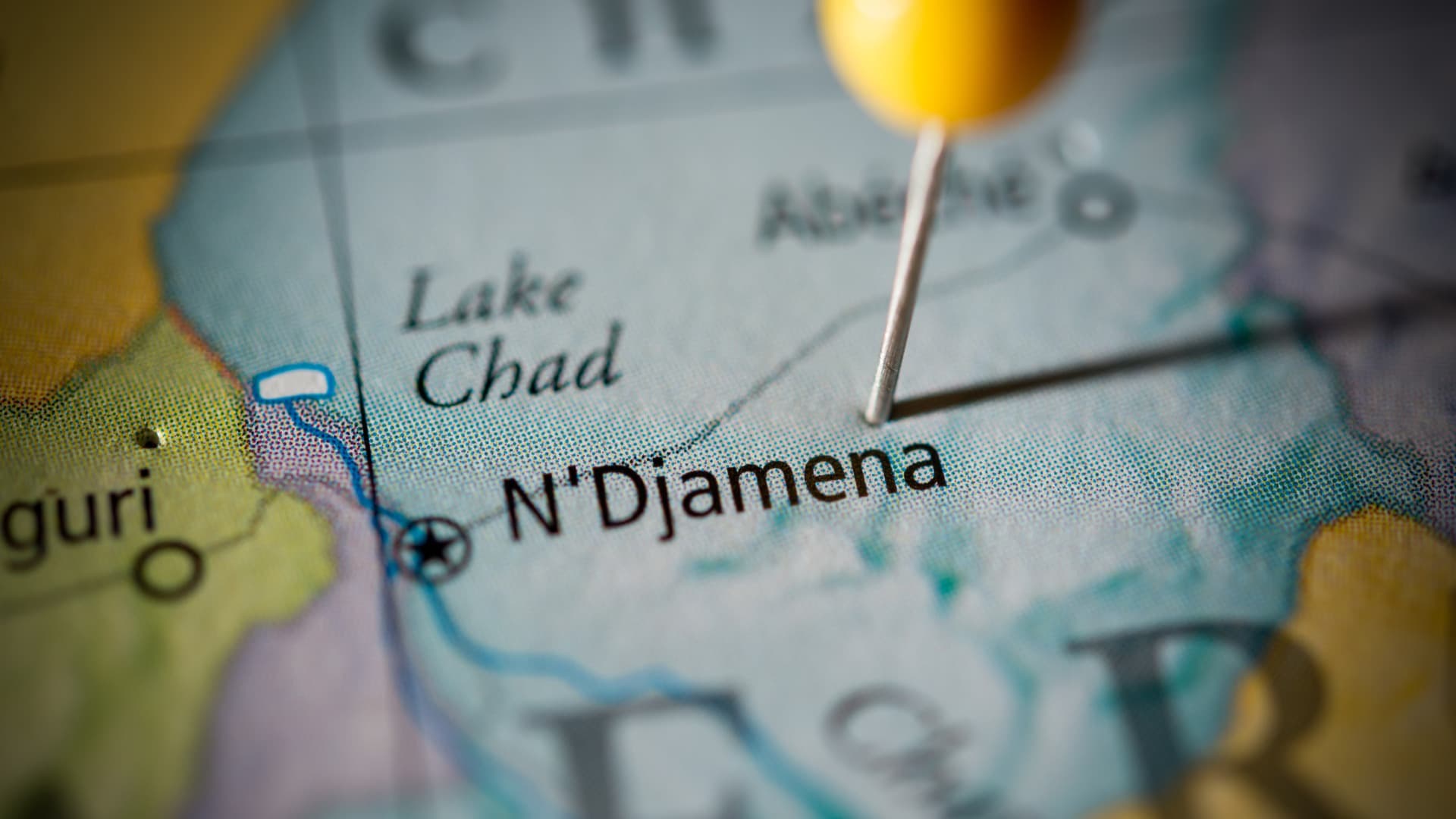
Arrival in N'Djamena, capital of Chad
Upon your arrival in Tchad, you land at Hassan Djamous International Airport, located in the heart of N'Djaména, the country's capital. This first step marks the beginning of your journey discovering Tchad.
Route to Abéché via Mongo
This morning, you set off towards Abéché, in eastern Tchad. Along the way, you make a stop in Mongo, capital of the Guéra region, for lunch. You then continue your journey to Abéché, where you spend the night at Oum Zara, from the NGO SOS Tchad. This stage marks your arrival in the eastern part of the country.
Ouadaï – Kalaït – Bachikélé
Abeche → Bachikélé
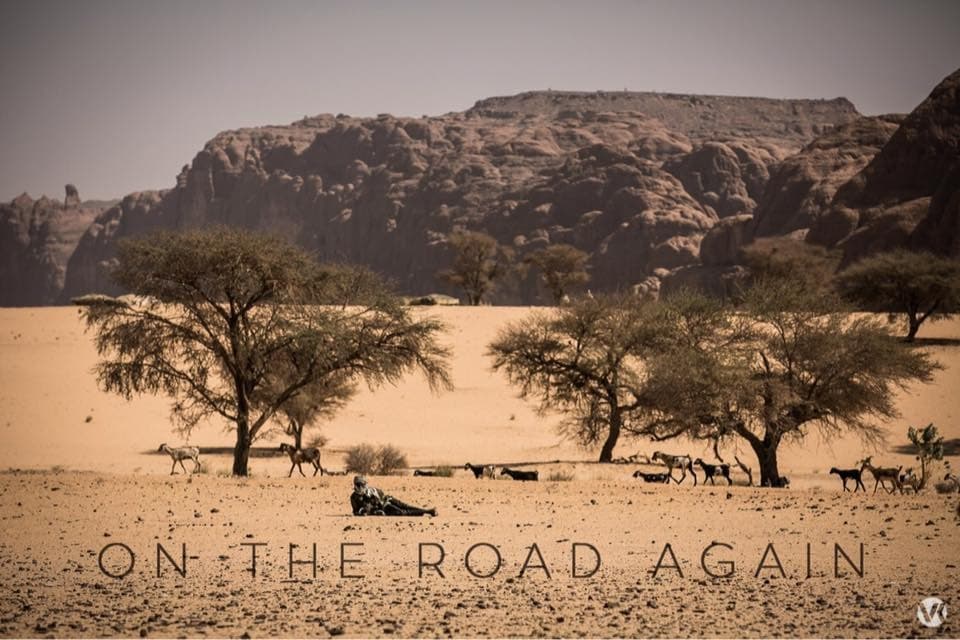
You continue your journey through the vast expanses of the Tchad desert, where arid landscapes stretch as far as the eye can see. Along the way, you pass through Kalaït, the last town before reaching the foothills of the Ennedi massif.
After this long crossing, you discover the desert landscapes that characterize this region of Tchad. You take a break to have lunch in a local restaurant, before heading to your camping site.
You set up your camp at the foot of the Djoulia arch, a rock formation that marks this new stage of your adventure in the Ennedi.
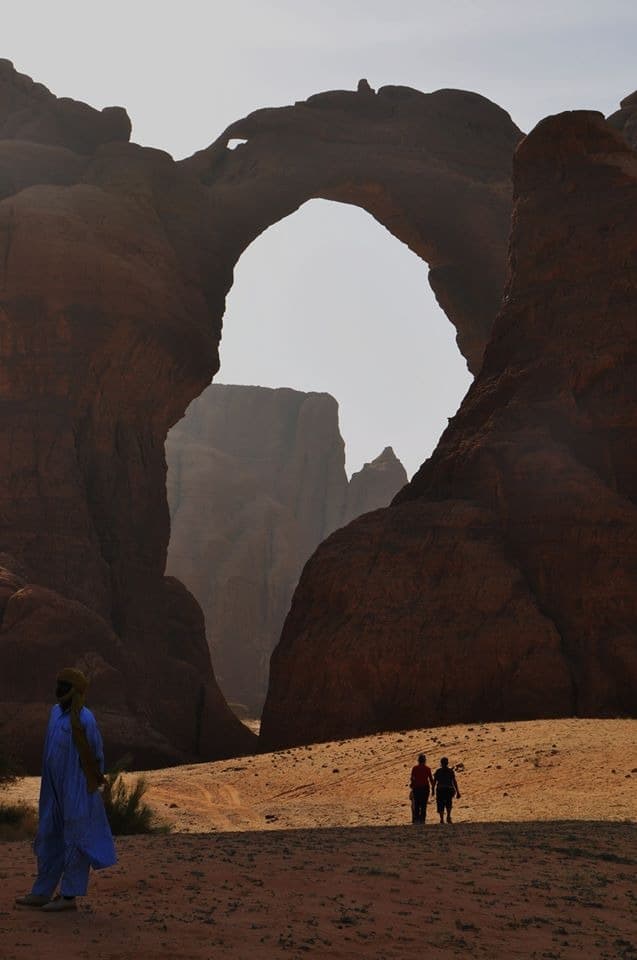
Oasis of Bachikélé and arches of the Ennedi
Bachikélé → Baména
Your day begins with an excursion to the Bachikélé oasis, in the heart of the Ennedi massif. This natural refuge is home to a diversity of animal and plant species that have managed to adapt to desert conditions. You discover this particular ecosystem, where life has developed over time in an arid environment.
The oasis is also a place of life for Zaghawa communities and their herds of camels. During your visit, you take care to respect the inhabitants and their traditions, in particular by asking their permission before photographing people and herds.
You continue your exploration by 4x4 across a vast plain, before reaching the Baména massif. At the foot of Mount Aloba, you discover an imposing rock arch, beneath which you stop for lunch.
In the afternoon, you head west along the massif, through rocky gorges and the arches of Chinéké and Koki. Your route then takes you to Tokouloula, nicknamed "the elephant arch", nestled in a massif with jagged ridges.
You end this day with a bivouac in the heart of the massif, where rock formations take on singular silhouettes as night falls.
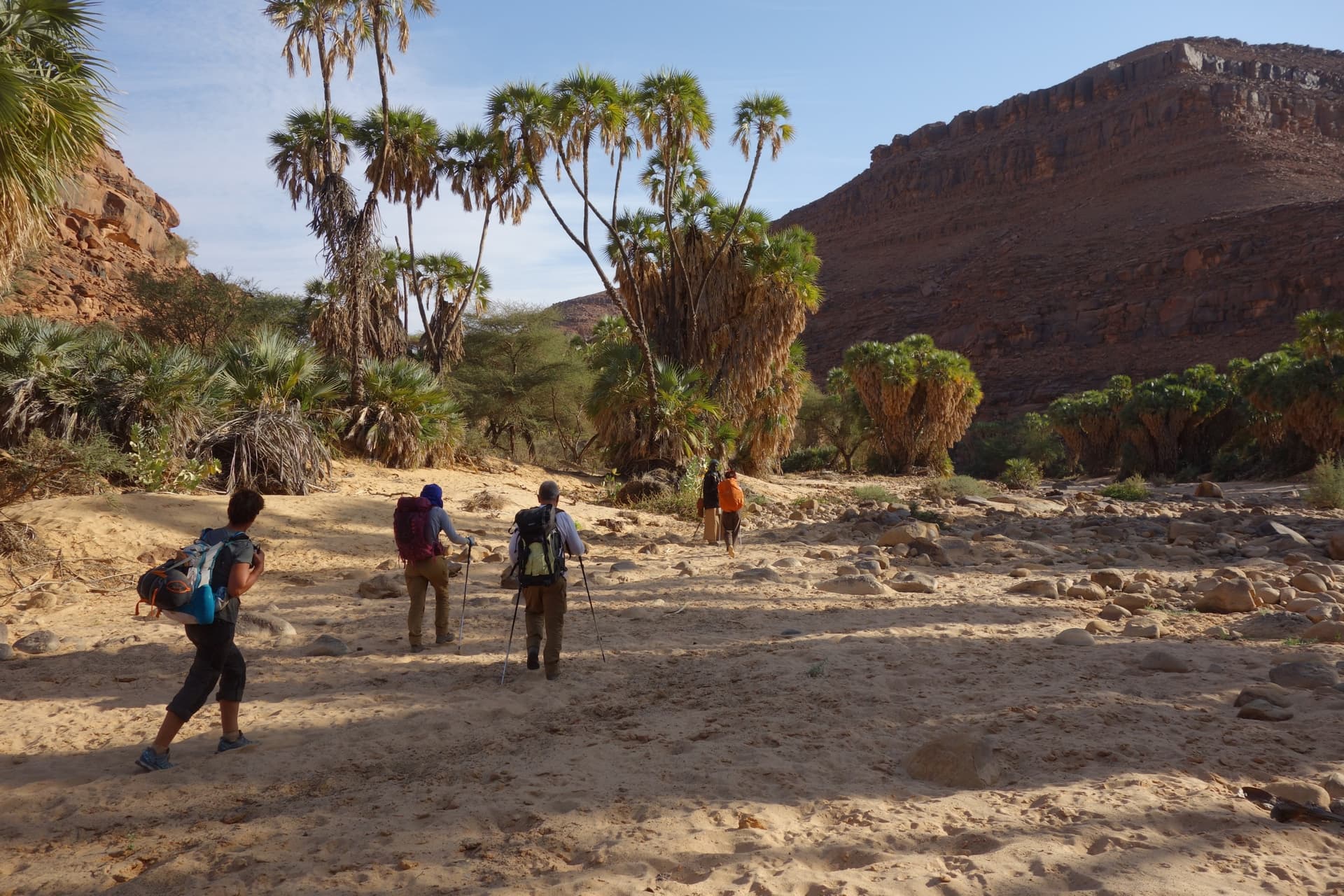
Hiking in the Archeï guelta
Baména → Guelta d'Archei
This morning, you set off on a hike through a winding canyon to the Toukou well. Throughout the journey, you make sure to respect the inhabitants and their traditions by avoiding taking photos, particularly of women, who generally prefer not to be photographed.
You continue your walk along the right bank of the Archeï wadi to reach the cave decorated with rock paintings, known as the "Grande Riparo" or "cave of the Italians".
Your itinerary then leads you to the edges of the Archeï guelta. From a rocky outcrop, you take time to observe the crocodiles coming out of the water.
You finally return to the guelta canyon to enjoy a picnic in the heart of this rocky landscape.
Guelta d'Archei → Ohio
You continue your adventure through the Ennedi massif, aboard your 4x4, heading towards the Ohio Labyrinth. This geological site with its singular rock formations invites you to discover a landscape shaped by nature, in the heart of the Tchad desert.
At the end of the day, you set up your bivouac at the Ohio Labyrinth, for a night in the heart of nature, in a mineral setting far from the ordinary.
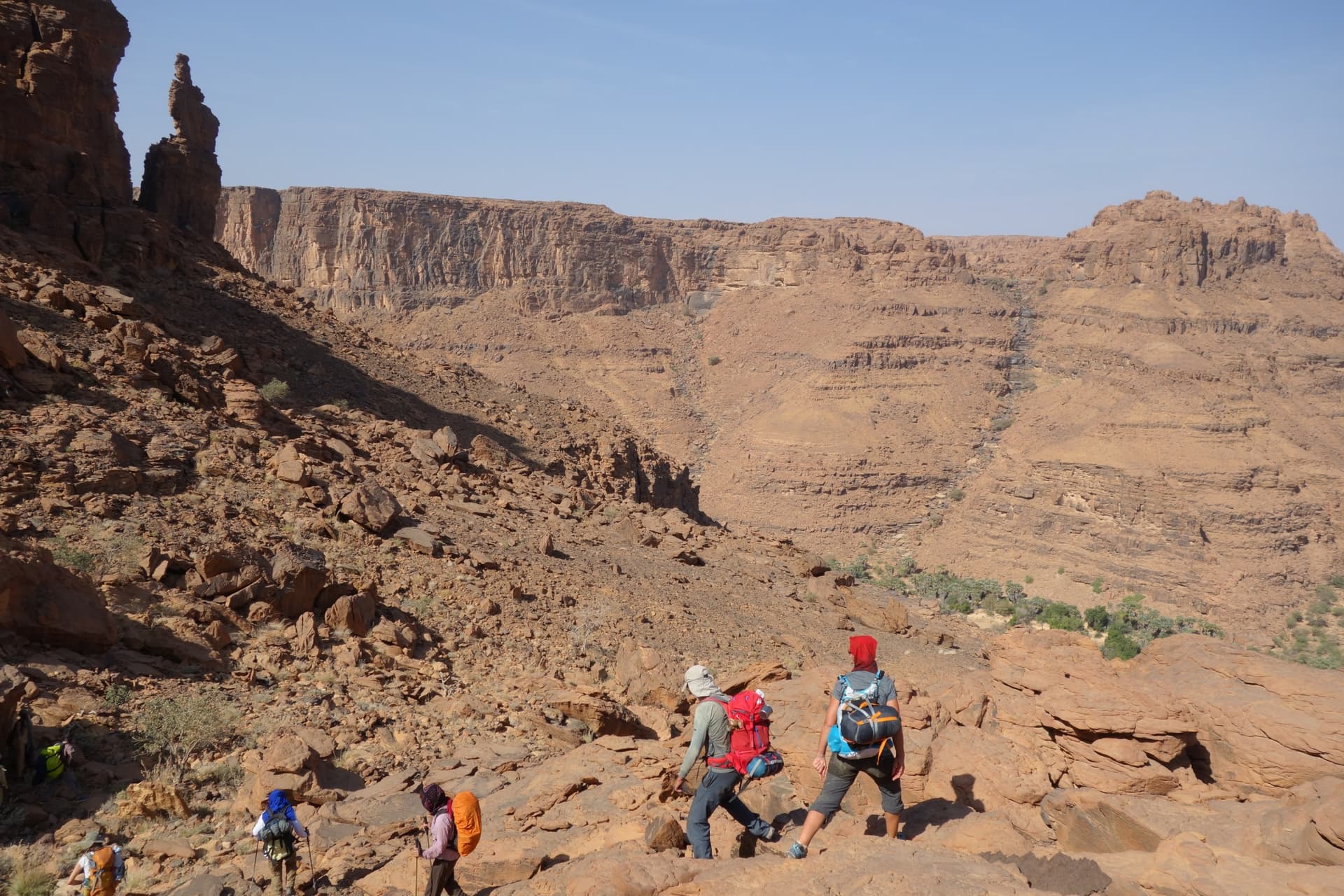
Exploration of Ohio's Labyrinth in 4x4
Ohio → Koboué
You take a short 4x4 journey to reach the starting point of your 9-day camel expedition across the Ennedi massif, which will end at the Koboué chasm.
During this itinerant and intensive trek, you explore the rocky landscapes of the Ennedi and discover gueltas nestled in the hollows of the plateau. These natural water reserves constitute genuine ecological refuges, allowing life to persist in this desert environment.
Your journey also immerses you in the history of the Sahara, once verdant, whose rock paintings and vestiges still bear witness today.
Each evening, you enjoy a night in a bivouac in the heart of the Ennedi, to extend this immersion in the landscapes of the Chad desert.
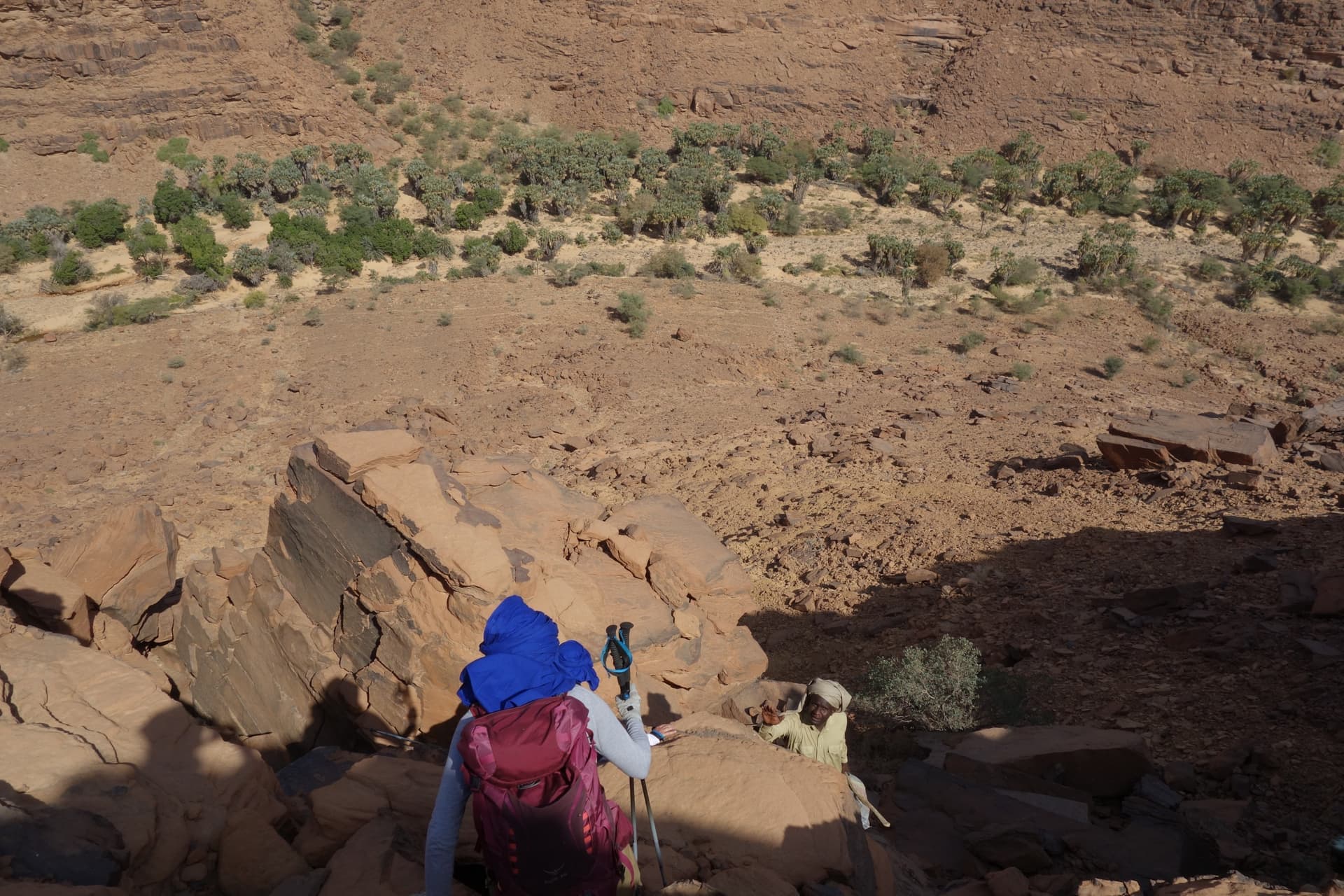
Camel expedition in the Ennedi
This day is dedicated to exploring the Koboué sinkhole, in the heart of the rocky landscapes of the Ennedi massif. You take time to immerse yourself in this singular environment and its natural formations.
For those who wish, it is possible to climb onto the plateau, with an elevation gain of approximately 400 meters, to enjoy a plunging view over the Koboué sinkhole.
You then set off to discover the discreet fauna that inhabits these landscapes, in particular baboons and rock hyraxes. You also have the possibility to refresh yourself with a swim in the cold waters of the gueltasgueltasgueltasgueltasgueltasgueltasgueltasgueltasgueltasgueltasgueltasgueltasgueltasgueltasgueltasgueltasgueltasgueltasgueltasgueltasgueltasgueltasgueltasgueltasgueltasgueltasgueltasgueltasgueltasgueltasgueltasgueltasgueltasgueltasgueltasgueltasgueltasgueltasgueltasgueltasgueltasgueltasgueltasgueltasgueltasgueltasgueltasgueltasgueltasgueltasgueltasgueltasgueltasgueltasgueltasgueltasgueltasgueltasgueltasgueltasgueltasgueltasgueltasgueltasgueltasgueltasgueltasgueltasgueltasgueltasgueltasgueltasgueltasgueltasgueltasgueltasgueltasgueltasgueltasgueltasgueltasgueltasgueltasgueltasgueltasgueltasgueltasgueltasgueltasgueltasgueltasgueltasgueltasgueltasgueltasgueltasgueltasgueltasgueltasgueltasgueltasgueltasgueltasgueltasgueltasgueltasgueltasgueltasgueltasgueltasgueltasgueltasgueltasgueltasgueltasgueltasgueltasgueltasgueltasgueltasgueltasgueltasgueltasgueltasgueltasgueltasgueltasgueltasgueltasgueltasgueltasgueltasgueltasgueltasgueltasgueltasgueltasgueltasgueltasgueltasgueltasgueltasgueltasgueltasgueltasgueltasgueltasgueltasgueltasgueltasgueltasgueltasgueltasgueltasgueltasgueltasgueltasgueltasgueltasgueltasgueltasgueltasgueltasgueltasgueltasgueltasgueltasgueltasgueltasgueltasgueltasgueltasgueltasgueltasgueltasgueltasgueltasgueltasgueltasgueltasgueltasgueltasgueltasgueltasgueltasgueltasgueltasgueltasgueltasgueltasgueltasgueltasgueltasgueltasgueltasgueltasgueltasgueltasgueltasgueltasgueltasgueltasgueltasgueltasgueltasgueltasgueltasgueltasgueltasgueltasgueltasgueltasgueltasgueltasgueltasgueltasgueltasgueltasgueltasgueltasgueltasgueltasgueltasgueltasgueltasgueltasgueltasgueltasgueltasgueltasgueltasgueltasgueltasgueltasgueltasgueltasgueltasgueltasgueltasgueltasgueltasgueltasgueltasgueltasgueltasgueltasgueltasgueltasgueltasgueltasgueltasgueltasgueltasgueltasgueltasgueltasgueltasgueltasgueltasgueltasgueltasgueltasgueltasgueltasgueltasgueltasgueltasgueltasgueltasgueltasgueltasgueltasgueltasgueltasgueltasgueltasgueltasgueltasgueltasgueltasgueltasgueltasgueltasgueltasgueltasgueltasgueltasgueltasgueltasgueltasgueltasgueltasgueltasgueltasgueltasgueltasgueltasgueltasgueltasgueltasgueltasgueltasgueltasgueltasgueltasgueltasgueltasgueltasgueltasgueltasgueltasgueltasgueltasgueltasgueltasgueltasgueltasgueltasgueltasgueltasgueltasgueltasgueltasgueltasgueltasgueltasgueltasgueltasgueltasgueltasgueltasgueltasgueltasgueltasgueltasgueltasgueltasgueltasgueltasgueltasgueltasgueltasgueltasgueltasgueltasgueltasgueltasgueltasgueltasgueltasgueltasgueltasgueltasgueltasgueltasgueltasgueltasgueltasgueltasgueltasgueltasgueltasgueltasgueltasgueltasgueltasgueltasgueltasgueltasgueltasgueltasgueltasgueltasgueltasgueltasgueltasgueltasgueltasgueltasgueltasgueltasgueltasgueltasgueltasgueltasgueltasgueltasgueltasgueltasgueltasgueltasgueltasgueltasgueltasgueltasgueltasgueltasgueltasgueltasgueltasgueltasgueltasgueltasgueltasgueltasgueltasgueltasgueltasgueltasgueltasgueltasgueltasgueltasgueltasgueltasgueltasgueltasgueltasgueltasgueltasgueltasgueltasgueltasgueltasgueltasgueltasgueltasgueltasgueltasgueltasgueltasgueltasgueltasgueltasgueltasgueltasgueltasgueltasgueltasgueltasgueltasgueltasgueltasgueltasgueltasgueltasgueltasgueltasgueltasgueltasgueltasgueltasgueltasgueltasgueltasgueltasgueltasgueltasgueltasgueltasgueltasgueltasgueltasgueltasgueltasgueltasgueltasgueltasgueltasgueltasgueltasgueltasgueltasgueltasgueltasgueltasgueltasgueltasgueltasgueltasgueltasgueltasgueltasgueltasgueltasgueltasgueltasgueltasgueltasgueltasgueltasgueltasgueltasgueltasgueltasgueltasgueltasgueltasgueltasgueltasgueltasgueltasgueltasgueltasgueltasgueltasgueltasgueltasgueltasgueltasgueltasgueltasgueltasgueltasgueltasgueltasgueltasgueltasgueltasgueltasgueltasgueltasgueltasgueltasgueltasgueltasgueltasgueltasgueltasgueltasgueltasgueltasgueltasgueltasgueltasgueltasgueltasgueltasgueltasgueltasgueltasgueltasgueltasgueltasgueltasgueltasgueltasgueltasgueltasgueltasgueltasgueltasgueltasgueltasgueltasgueltasgueltasgueltasgueltasgueltasgueltasgueltasgueltasgueltasgueltasgueltasgueltasgueltasgueltasgueltasgueltasgueltasgueltasgueltasgueltasgueltasgueltasgueltasgueltasgueltasgueltasgueltasgueltasgueltasgueltasgueltasgueltasgueltasgueltasgueltasgueltasgueltasgueltasgueltasgueltasgueltasgueltasgueltasgueltasgueltasgueltasgueltasgueltasgueltasgueltasgueltasgueltasgueltasgueltasgueltasgueltasgueltasgueltasgueltasgueltasgueltasgueltasgueltasgueltasgueltasgueltasgueltasgueltasgueltasgueltasgueltasgueltasgueltasgueltasgueltasgueltasgueltasgueltasgueltasgueltasgueltasgueltasgueltasgueltasgueltasgueltasgueltasgueltasgueltasgueltasgueltasgueltasgueltasgueltasgueltasgueltasgueltasgueltasgueltasgueltasgueltasgueltasgueltasgueltasgueltasgueltasgueltasgueltasgueltasgueltasgueltasgueltasgueltasgueltasgueltasgueltasgueltasgueltasgueltasgueltasgueltasgueltasgueltasgueltasgueltasgueltasgueltasgueltasgueltasgueltasgueltasgueltasgueltasgueltasgueltasgueltasgueltasgueltasgueltasgueltasgueltasgueltasgueltasgueltasgueltasgueltasgueltasgueltasgueltasgueltasgueltasgueltasgueltasgueltasgueltasgueltasgueltasgueltasgueltasgueltasgueltasgueltasgueltasgueltasgueltasgueltasgueltasgueltasgueltasgueltasgueltasgueltasgueltasgueltasgueltasgueltasgueltasgueltasgueltasgueltasgueltasgueltasgueltasgueltasgueltasgueltasgueltasgueltasgueltasgueltasgueltasgueltasgueltasgueltasgueltasgueltasgueltasgueltasgueltasgueltasgueltasgueltasgueltasgueltasgueltasgueltasgueltasgueltasgueltasgueltasgueltasgueltasgueltasgueltasgueltasgueltasgueltasgueltasgueltasgueltasgueltasgueltasgueltasgueltasgueltasgueltasgueltasgueltasgueltasgueltasgueltasgueltasgueltasgueltasgueltasgueltasgueltasgueltasgueltasgueltasgueltasgueltasgueltasgueltasgueltasgueltasgueltasgueltasgueltasgueltasgueltasgueltasgueltasgueltasgueltasgueltasgueltasgueltasgueltasgueltasgueltasgueltasgueltasgueltasgueltasgueltasgueltasgueltasgueltasgueltasgueltasgueltasgueltasgueltasgueltasgueltasgueltasgueltasgueltasgueltasgueltasgueltasgueltasgueltasgueltasgueltasgueltasgueltasgueltasgueltasgueltasgueltasgueltasgueltasgueltasgueltasgueltasgueltasgueltasgueltasgueltasgueltasgueltasgueltasgueltasgueltasgueltasgueltasgueltasgueltasgueltasgueltasgueltasgueltasgueltasgueltasgueltasgueltasgueltasgueltasgueltasgueltasgueltasgueltasgueltasgueltasgueltasgueltasgueltasgueltasgueltasgueltasgueltasgueltasgueltasgueltasgueltasgueltasgueltasgueltasgueltasgueltasgueltasgueltasgueltasgueltasgueltasgueltasgueltasgueltasgueltasgueltasgueltasgueltasgueltasgueltasgueltasgueltasgueltasgueltasgueltasgueltasgueltasgueltasgueltasgueltasgueltasgueltasgueltasgueltasgueltasgueltasgueltasgueltasgueltasgueltasgueltasgueltasgueltasgueltasgueltasgueltasgueltasgueltasgueltasgueltasgueltasgueltasgueltasgueltasgueltasgueltasgueltasgueltasgueltasgueltasgueltasgueltasgueltasgueltasgueltasgueltasgueltasgueltasgueltasgueltasgueltasgueltasgueltasgueltasgueltasgueltasgueltasgueltasgueltasgueltasgueltasgueltasgueltasgueltasgueltasgueltasgueltasgueltasgueltasgueltasgueltasgueltasgueltasgueltasgueltasgueltasgueltasgueltasgueltasgueltasgueltasgueltasgueltasgueltasgueltasgueltasgueltasgueltasgueltasgueltasgueltasgueltasgueltasgueltasgueltasgueltasgueltasgueltasgueltasgueltasgueltasgueltasgueltasgueltasgueltasgueltasgueltasgueltasgueltasgueltasgueltasgueltasgueltasgueltasgueltasgueltasgueltasgueltasgueltasgueltasgueltasgueltasgueltasgueltasgueltasgueltasgueltasgueltasgueltasgueltasgueltasgueltasgueltasgueltasgueltasgueltasgueltasgueltasgueltasgueltasgueltasgueltasgueltasgueltasgueltasgueltasgueltasgueltasgueltasgueltasgueltasgueltasgueltasgueltasgueltasgueltasgueltasgueltasgueltasgueltasgueltasgueltasgueltasgueltasgueltasgueltasgueltasgueltasgueltasgueltasgueltasgueltasgueltasgueltasgueltasgueltasgueltasgueltasgueltasgueltasgueltasgueltasgueltasgueltasgueltasgueltasgueltasgueltasgueltasgueltasgueltasgueltasgueltasgueltasgueltasgueltasgueltasgueltasgueltasgueltasgueltasgueltasgueltasgueltasgueltasgueltasgueltasgueltasgueltasgueltasgueltasgueltasgueltasgueltasgueltasgueltasgueltasgueltasgueltasgueltasgueltasgueltasgueltasgueltasgueltasgueltasgueltasgueltasgueltasgueltasgueltasgueltasgueltasgueltasgueltasgueltasgueltasgueltasgueltasgueltasgueltasgueltasgueltasgueltasgueltasgueltasgueltasgueltasgueltasgueltasgueltasgueltasgueltasgueltasgueltasgueltasgueltasgueltasgueltasgueltasgueltasgueltasgueltasgueltasgueltasgueltasgueltasgueltasgueltasgueltasgueltasgueltasgueltasgueltasgueltasgueltasgueltasgueltasgueltasgueltasgueltasgueltasgueltasgueltasgueltasgueltasgueltasgueltasgueltasgueltasgueltasgueltasgueltasgueltasgueltasgueltasgueltasgueltasgueltasgueltasgueltasgueltasgueltasgueltasgueltasgueltasgueltasgueltasgueltasgueltasgueltasgueltasgueltasgueltasgueltasgueltasgueltasgueltasgueltasgueltasgueltasgueltasgueltasgueltasgueltasgueltasgueltasgueltasgueltasgueltasgueltasgueltasgueltasgueltasgueltasgueltasgueltasgueltasgueltasgueltasgueltasgueltasgueltasgueltasgueltasgueltasgueltasgueltasgueltasgueltasgueltasgueltasgueltasgueltasgueltasgueltasgueltasgueltasgueltasgueltasgueltasgueltasgueltasgueltasgueltasgueltasgueltasgueltasgueltasgueltasgueltasgueltasgueltasgueltasgueltasgueltasgueltasgueltasgueltasgueltasgueltasgueltasgueltasgueltasgueltasgueltasgueltasgueltasgueltasgueltasgueltasgueltasgueltasgueltasgueltasgueltasgueltasgueltasgueltasgueltasgueltasgueltas
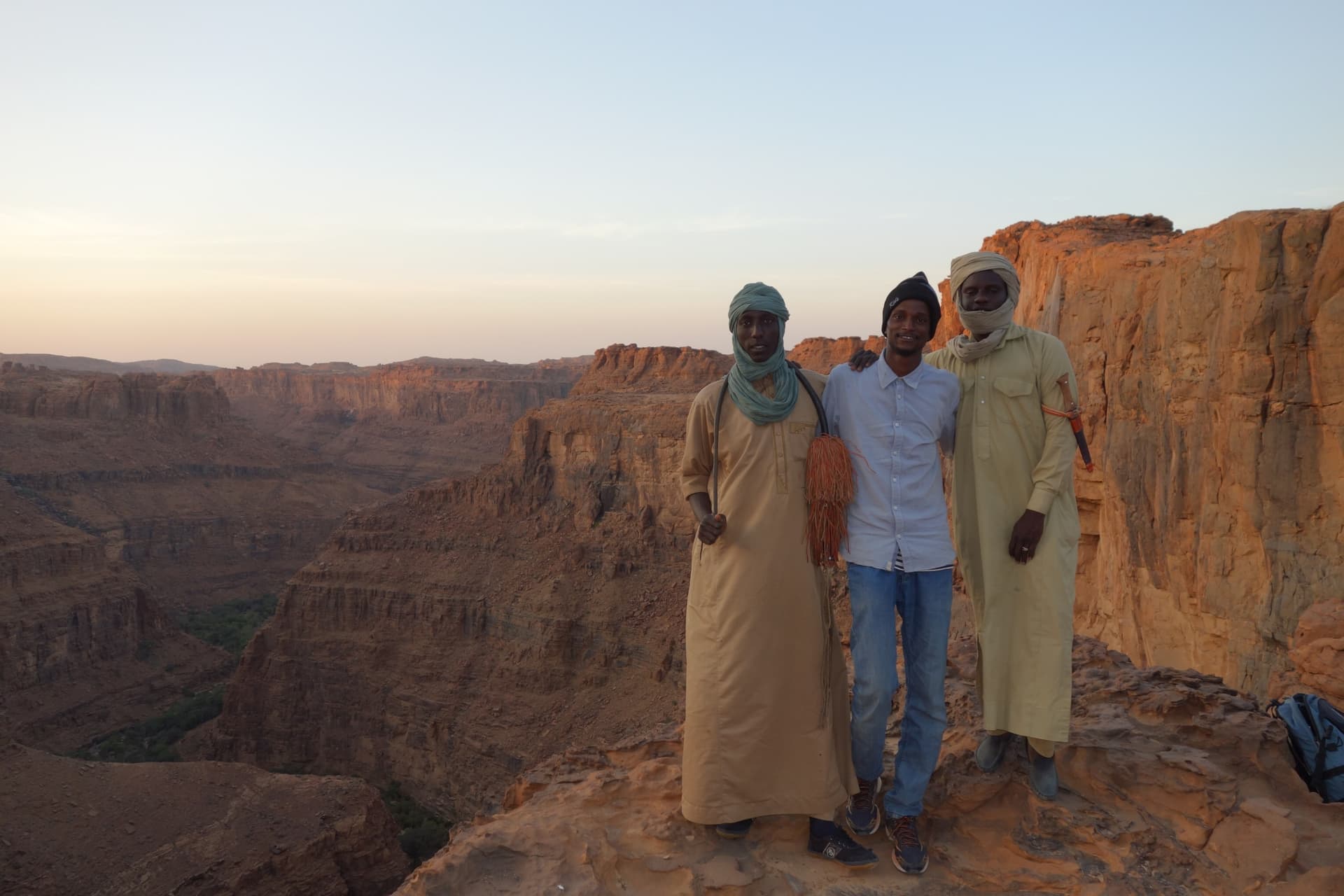
Werta Gorges Crossing
Koboué → Werta
You continue your expedition through the Ennedi massif by crossing the Werta gorges, a territory particularly favorable to the Barbary sheep. These rocky landscapes shelter discreet wildlife that you may have the chance to observe as you progress.
Once frequented by addax, still present a few years ago, the gorges also welcome different animal species. With a bit of luck, you may catch sight of gazelles, fennecs or jackals, and more rarely hares.
This crossing offers you a new opportunity to discover the wildlife of the Ennedi, in its natural environment.
Werta → Tebi
You continue your journey by stopping at Tebi, where you pay a courtesy visit to local authorities and the canton chief. This approach demonstrates respect for local traditions and customs, an essential dimension of your trip to Chad.
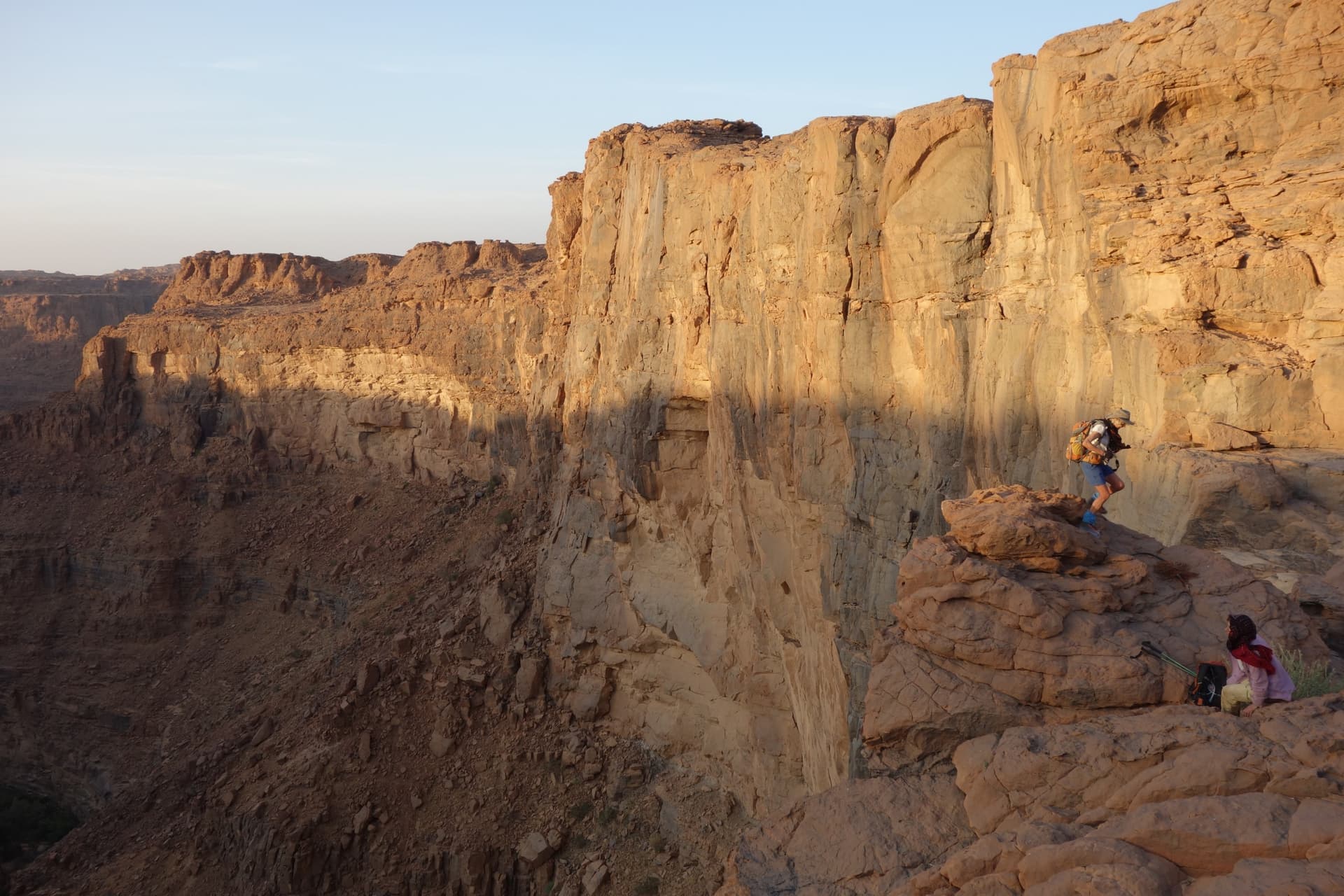
Meeting with Tebi authorities
Tebi → Ounianga Sérir
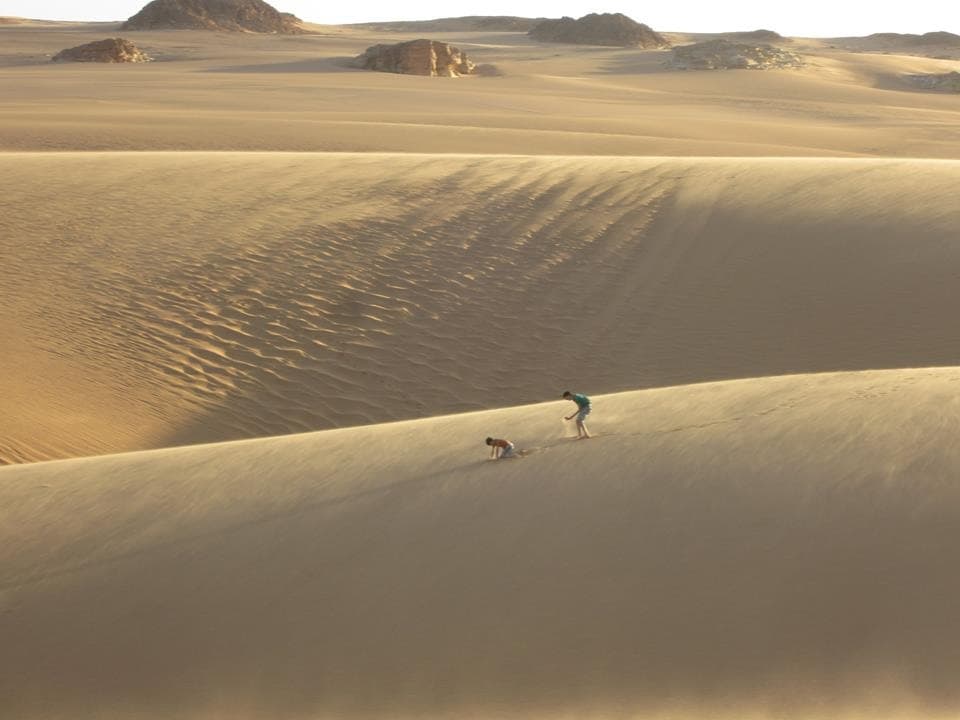
You continue your exploration of a little-frequented region of the Ennedi massif, through the desert landscapes of Tchad. Your itinerary first takes you through the dunes of Mourdi, short barchans whose forms evolve rapidly under the effect of winds.
You then reach Démi and the salt flats of Téguédeï, where you discover salt extracted from the ground, recognizable by its reddish hue. This stage allows you to observe another facet of the region's mineral landscapes.
At the end of the day, you set up your bivouac on the outskirts of Ounianga Kebir, for another night in the heart of the Tchadian desert.
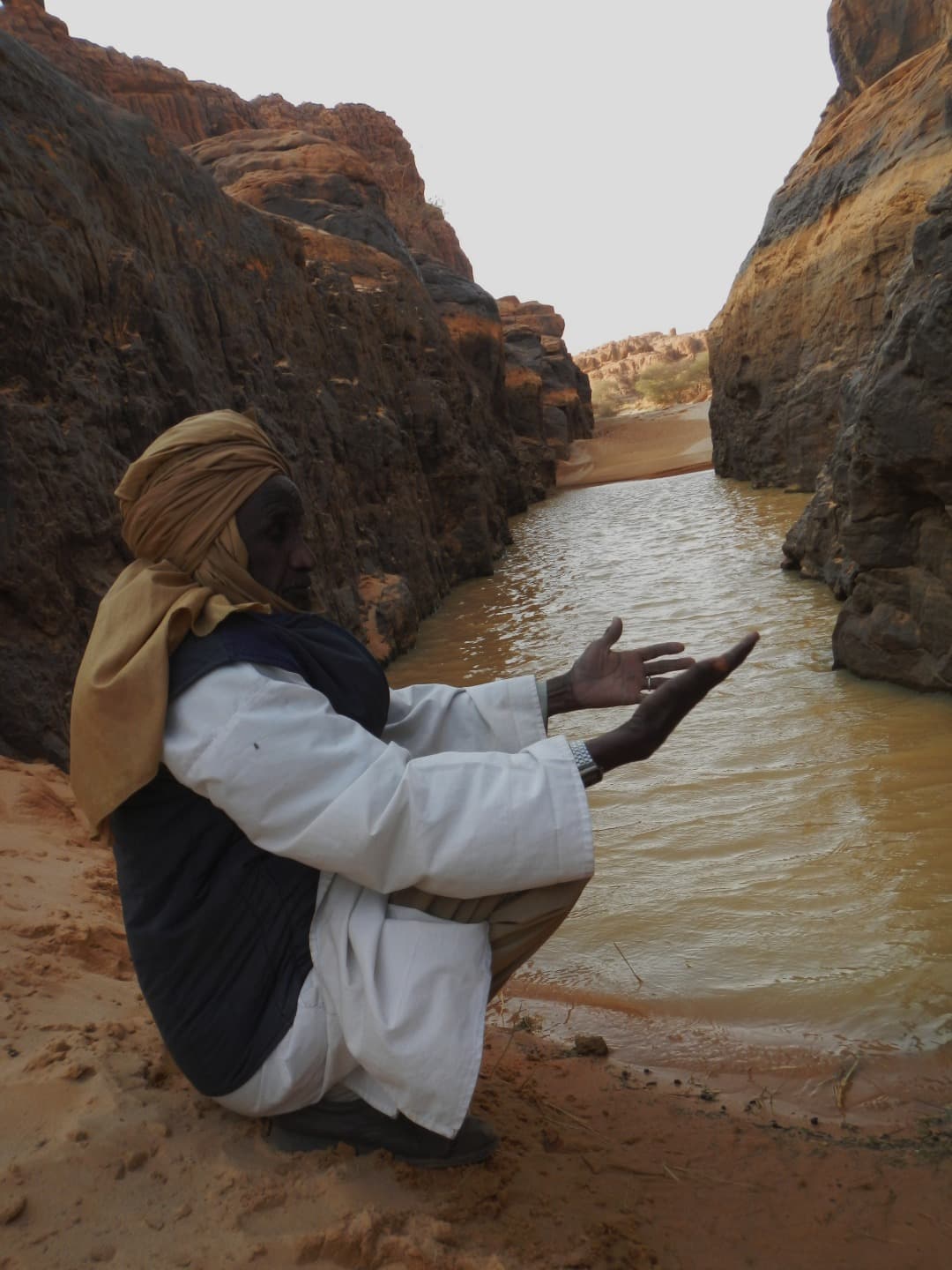
Exploration of Ounianga Sérir Lakes
Ounianga Sérir → Bir Koray
You embark on a discovery of the lakes of Ounianga Sérir, a set of 14 lakes nestled in the heart of the Tchad desert. Among them, the Bokou lake stands out for its fresh waters, populated with fish and bordered by reed beds. You have the opportunity to enjoy a swim in this singular natural setting.
These lakes are also home to varied bird life. You will be able to observe notably white stilts, Cape teals and marbled teals. They also constitute an important stopover for many migratory birds. At nightfall, the cries of golden jackals that gather to hunt sometimes resound in the surroundings.
Remnants of an immense paleolake dating from the last humid period of the Sahara, approximately 8,000 years ago, the Ounianga lakes are fed by several sources of fresh and warm water. Despite strong evaporation, these supplies make it possible to maintain the basins in water. The inhabitants also use these resources for their daily consumption and the watering of small gardens arranged under the palm trees.
You then resume the journey across the vast plains of the center of the territory to reach Bir Koray, a locality marked by the history of Tchad-Libyan conflicts.
At the end of the day, you set up your camp in the heart of a barchan or towards the western foothills of the Ennedi massif, for another night in the desert.
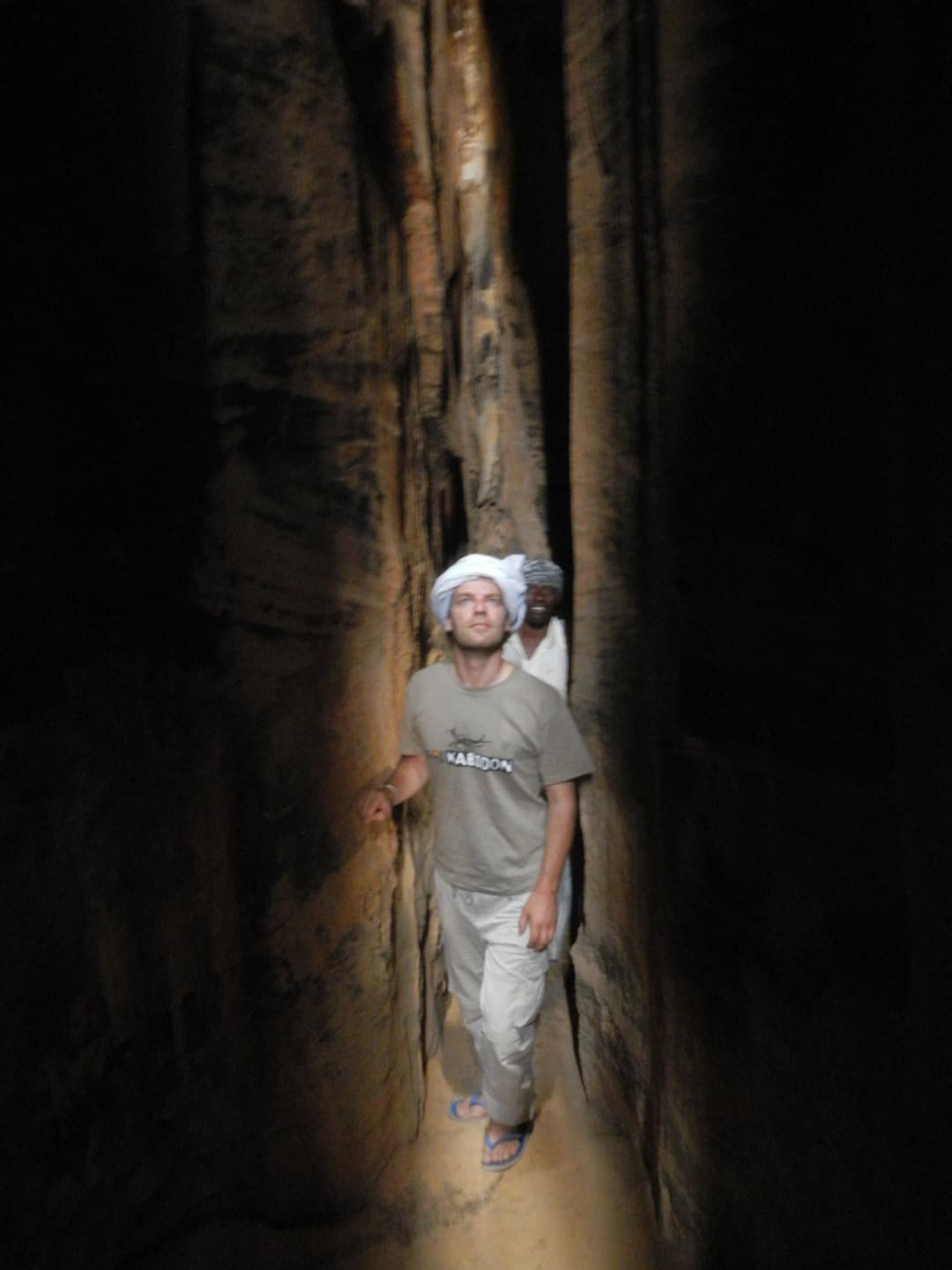
From Fada to Gaora Halagana
Bir Koray → Fada
You continue your crossing of the Ennedi massif by skirting the sandstone cliffs until Fada. Along the way, the rocky landscapes and surprises encountered en route punctuate your progress through this region of Tchad.
At Fada, you make a stop at the local market to stock up, before leisurely resuming your journey towards Gaora Halagana, also called "the cave of the young".
At the end of the day, you set up your bivouac between sand and rock, for another night in the heart of nature, in the mineral environment of the Ennedi.
Crossing the plateaus towards Kalaït
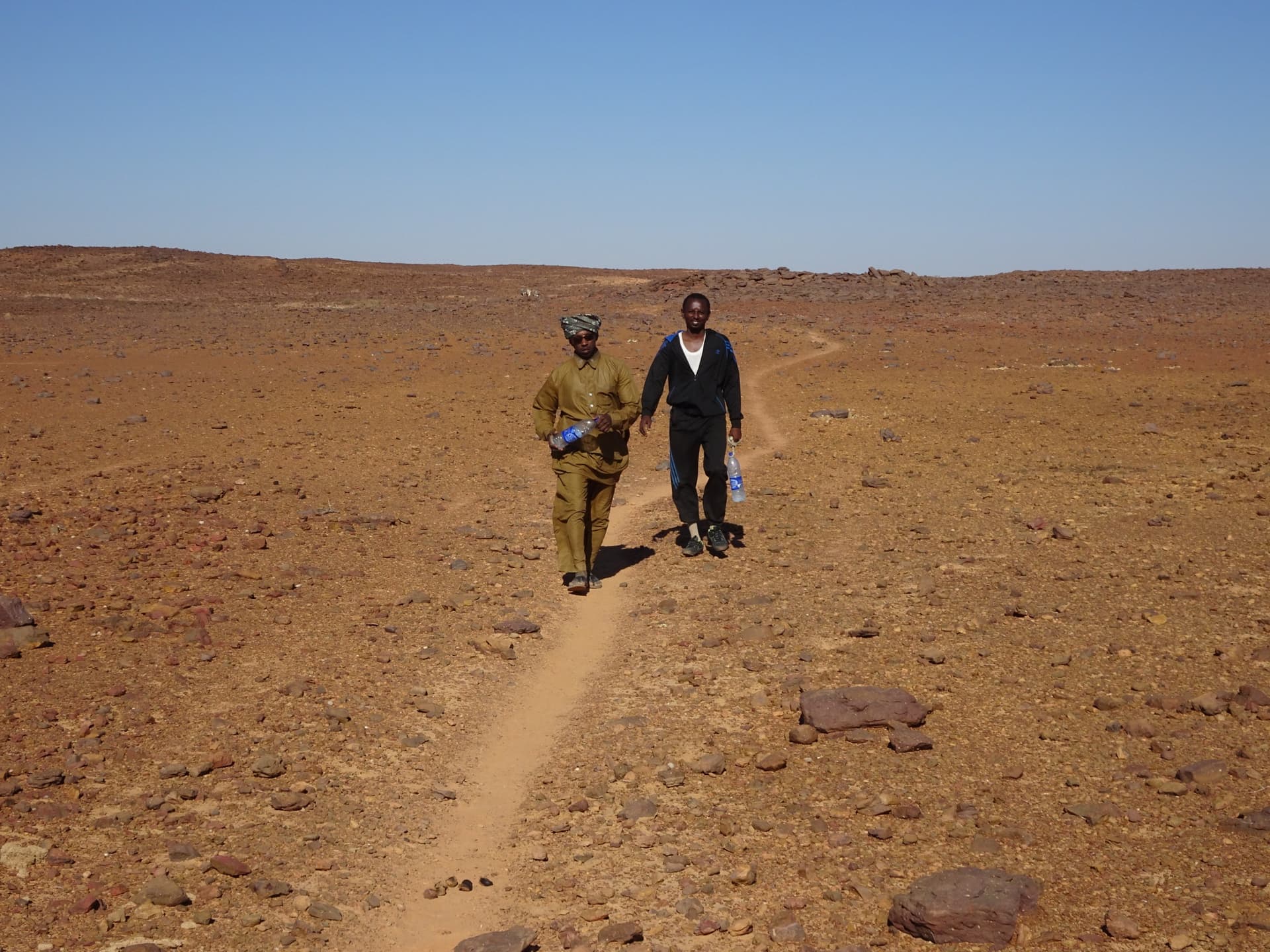
You continue your journey across the vast plateaus of Tchad, through desert landscapes, before reaching Kalaït, a town notably known for its frequent sandstorms. This stage marks the continuation of your crossing through this region with demanding natural conditions.
Kalaït → Batan Djéné
You continue your journey through the landscapes of transition between the Sahara and the Sahel, where desert expanses gradually give way to Sahelian landscapes.
Your itinerary then leads you to Bata'n Djéné, nicknamed "the belly of paradise", an Anakasa center located in the heart of this Tchad region.
Batan Djéné → Moussoro
You continue your journey through the Sahelian region of Tchad in the direction of Moussoro, a town marked by the presence of nomadic populations, a large part of which practice cattle breeding, camels and goat herding. This stage allows you to experience the pastoral way of life that characterizes this region of Tchad.
At the end of the day, you set up your camp in the open bush, for another night in the heart of Sahelian landscapes.
Moussoro – N'Djamena
After your stay in Moussoro, you continue your journey through the Sahel region of Tchad until you reach Massakouri, where you rejoin the paved road.
In early afternoon, you head towards N'Djamena, the capital of Tchad, marking the final stage of your circuit.
Upon arrival, you enjoy a shower at the hotel before having dinner, which is at your own expense.
Finally, you are transferred to N'Djamena airport for check-in formalities and your return flight.
Flight N'Djaména – Paris
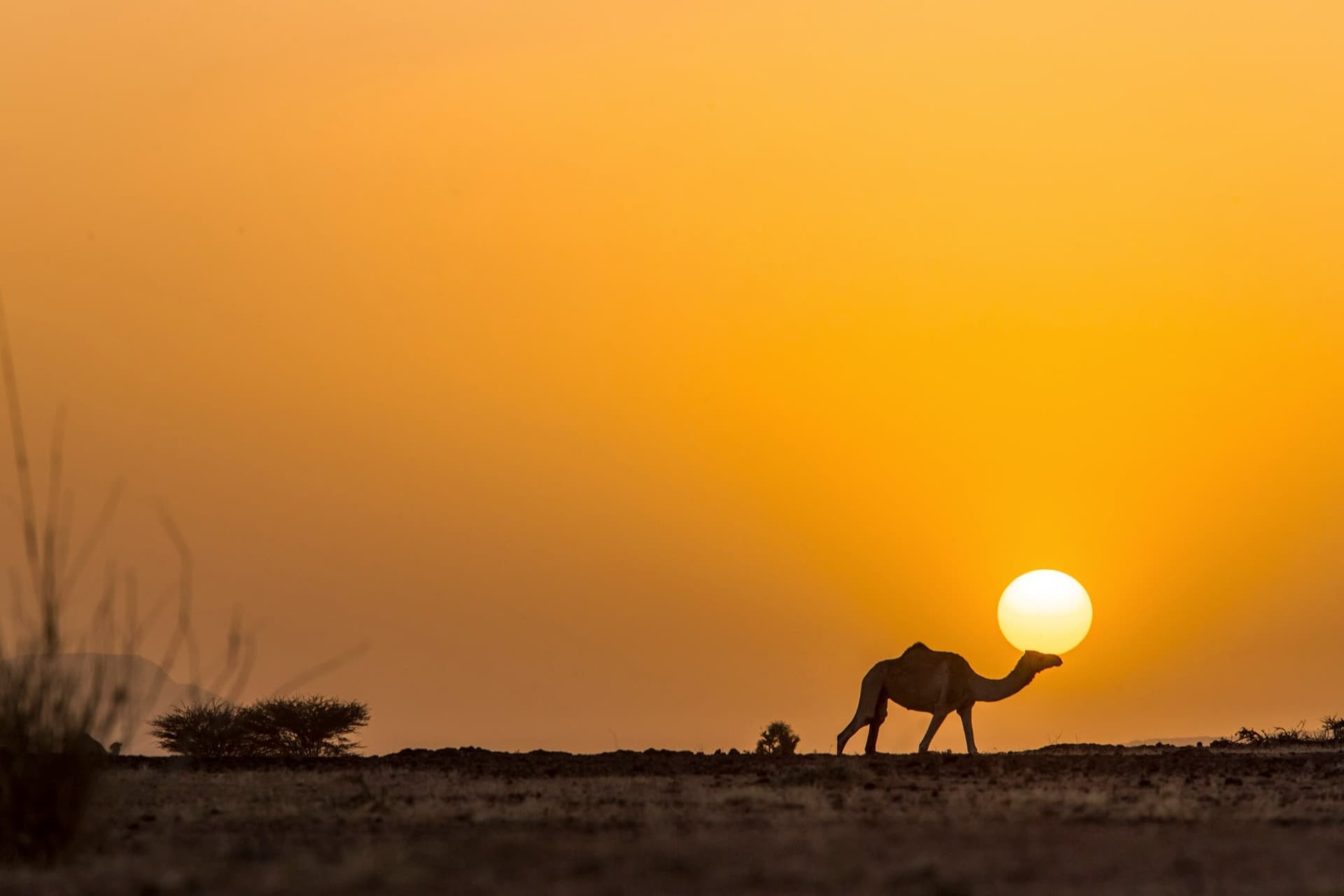
You spend the night on board your flight between N'Djaména and Paris, marking the end of your journey to Tchad.
You arrive in Paris in the morning of day 24, with the memories of your adventure through the landscapes of the Sahara and the Sahel of Tchad.
Price per person
This trip can be tailored to your preferences
This itinerary provides an excellent foundation for discovery, but it can be fully customized. Our local advisors build each trip tailored to your budget, dates and preferences.
Not included
- Visa Fees
- Individual room supplements
- Travel Insurance and Repatriation
- Beverage during the tour
- Drinks and Meals in N'Djamena
- International flight
- Tips
Included
- Hotel in N'Djamena
- Food, 4x4 vehicle and fuel
- Entrance fees at sites
- Throughout the entire trip English-speaking guide and cook Toumay travel
- Camel team Toumay travel
- Domestic Flights
Practical Information
Registration is considered firm and final after payment of a deposit of 30% of the total price and acceptance of the specific terms of sale.
The balance must be paid no later than 45 days before the departure date.
See our specific terms of sale for full details.
In the event of cancellation by the traveller, the following fees apply:
- Plus de 60 jours avant le départ : 40 % du prix total (acompte retenu)
- Entre 60 et 30 jours avant le départ : 50 % du prix total
- Moins de 30 jours avant le départ : 100 % du prix total
We strongly recommend taking out cancellation insurance. See our specific terms of sale for full details.
The information below concerns travelers who are nationals of the European Economic Area (EEA), Switzerland and Canada traveling to Chad for a tourism stay. Entry rules may change, and we recommend that you verify the information with official authorities before your departure.
Passport
To enter Chad, your passport must be valid for at least six months from the date of entry into the country and have at least two blank pages for immigration stamps.
The document must be in good condition (no damaged, torn or altered pages).
Mandatory visa
Nationals of the European Economic Area, Switzerland and Canada must hold a visa to enter Chad for tourism purposes. There is no visa exemption for these nationalities.
The visa can be obtained:
from the Chad embassy or consulate competent for your area before departure,
in certain cases, on arrival at Hassan Djamous International Airport in N'Djamena (visa on arrival), subject to prior confirmation with Chad authorities, and this option may be subject to conditions.
The authorized stay is generally 30 days, renewable on-site with Chad immigration services.
Authorities may request:
an exit ticket from the territory (return or onward flight),
proof of sufficient financial resources for the duration of your stay,
an invitation or accommodation proof.
Health and vaccinations
Yellow fever vaccination is mandatory to enter Chad. The international vaccination certificate (yellow booklet) will be required on arrival.
Additional vaccinations are strongly recommended by health authorities:
meningitis A, C, Y, W135 (Chad is located in the African meningitis belt),
hepatitis A and B,
typhoid,
rabies depending on planned activities.
Preventive antimalarial treatment (antimalarial prophylaxis) is strongly recommended, as malaria is present throughout the territory. Consult your doctor or an international vaccination center before departure.
Traveling with children
Minors must hold their own valid passport and an individual visa covering the duration of the stay.
In certain European countries, when a minor travels without one of their parents, an authorization to leave the territory may be required according to the regulations of the country of residence.
Other nationalities
Entry conditions may vary depending on nationality. Travelers concerned should contact the Chad embassy or consulate in their country of residence.
We strongly recommend you to take out evacuation and medical expense coverage abroad when participating in our trips.
Your local agency encourages you to review the specific policy developed with our partner CHAPKA ASSURANCES and AXA ASSISTANCE.
To purchase insurance, learn about coverage and rates, follow the link below.
CAP EXPLORER: The complete insurance solution designed for a worry-free trip!
Choose the plan that suits you best:
Explorer'Multirisque
Explorer'Annulation
Explorer'Assistance
Explorer' Complémentaire Carte Bancaire
Specific to our trips, we strongly recommend you subscribe to them.
Should you choose to purchase one of these plans, the full terms and conditions detailing all coverage and claim procedures are available on the insurer's website.
Your local agency will be aware of them, but only the participant is responsible for complying with all claim notification procedures. The participant should therefore keep this policy with them throughout their entire trip.
Frequently asked questions
A tourist visa is mandatory and must be requested from the embassy before departure. Your passport must be valid for at least 6 months beyond your entry date. An up-to-date vaccination record is required, particularly for yellow fever. The security context requires maximum vigilance. Before booking, verify with the consular authorities of your destination the entry requirements applicable to your nationality.
Go to the My Trips section to find all your projects.
You can send a message to your host directly from the Tea Lounge.
For a tailor-made quality trip, budget between €250 and €450 per day and per person, including accommodation, meals, 4x4 with driver-guide and activities. International flights (€800-1,200 return) are extra. Chad remains a rare and demanding destination, reserved for experienced travellers.
Your documents are accessible in the Documents tab of your trip.
Absolutely. We adapt each itinerary to the traveler's profile. For families, we prioritize relaxed pacing, family-friendly accommodations, engaging and educational activities, and comfortable private transfers. Our English-speaking local guides know how to capture children's attention with age-appropriate stories.
It's simple. You exchange with our local team to define your wishes, budget and dates. You receive a detailed itinerary proposal within 48 hours. You refine every detail together until it's perfect. You confirm and travel with peace of mind. Your local agency remains available 7 days a week throughout your trip.
In case of emergency, contact your local agency immediately.
Payment is generally made in two installments.
Our agency is part of the Nomadays network, registered in France. You benefit from APST (Association Professionnelle de Solidarité du Tourisme) guarantee which covers 100% of your funds. Secure payment, repatriation insurance included, and English-speaking assistance 24/7 on site throughout your stay.
Let's talk about your adventure — Desert North
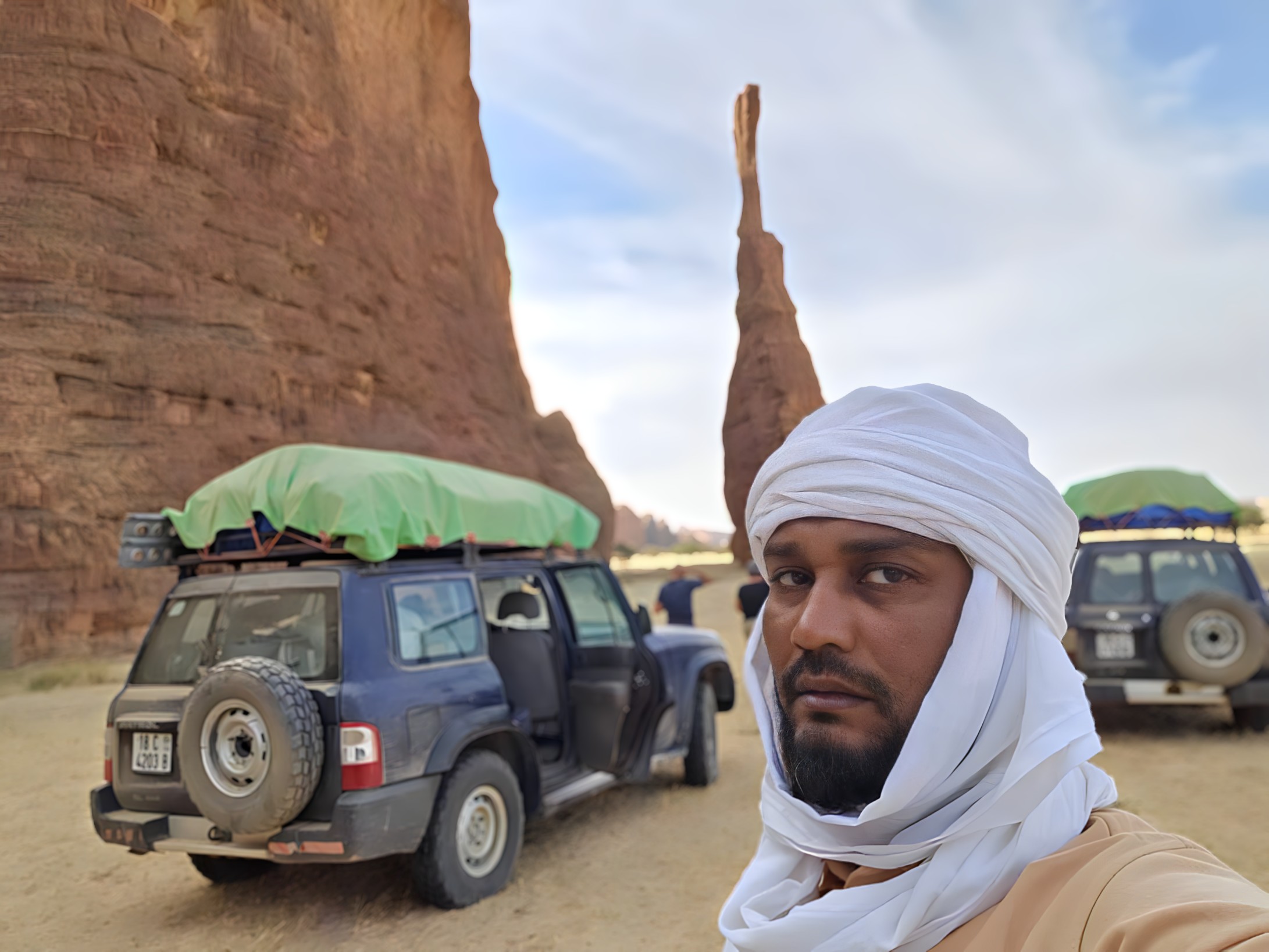
Sahara Guide from Chad, based in N'djamena
In Chad, the desert is never empty. There are the traces, the landscapes, the stories, the camps, and that light that changes everything throughout the day.
— Faris