Zakouma National Park
Zakouma National Park
Managed by African Parks since 2010, Zakouma National Park (Salamat region) is home to one of Central Africa's largest concentrations of elephants and rare species such as the African wild dog.
Zakouma National Park spans roughly 3,000 km² in south-eastern Chad, at the edge of the Lake Chad basin and Sudanese savannas. Managed since 2010 by African Parks in partnership with the Chadian government, it has become one of Central Africa's most celebrated examples of wildlife restoration. Its elephants, once decimated by poaching, now constitute one of the continent's most closely monitored populations.
Quick facts
- Access: Charter flight from N'Djamena to the Am Timan airstrip or directly to camp; no reliable paved road from the capital.
- Open season: The park is generally open from November to June (dry season); it closes during the rainy season (July–October) due to impassable tracks.
- Recommended duration: 3 to 5 nights minimum for good wildlife viewing.
- Dress code: Neutral clothing (khaki, beige, olive green); avoid white and bright colours on safari.
- Rules: All excursions must be accompanied by an armed park ranger; stepping out of the vehicle outside designated zones is prohibited.
Wildlife highlights
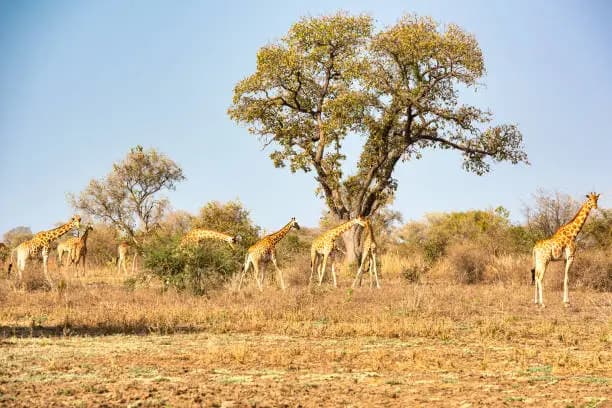
Zakouma is home to one of Central Africa's last major concentrations of savanna elephants. During the dry season, herds numbering hundreds converge on permanent water holes. The park also shelters Cape buffalo, roan antelopes, giraffes, lions, leopards and African wild dogs — a rare and elusive species. More than 370 bird species have been recorded, including the African jabiru and several heron species.
History and context
Established in 1963, Zakouma suffered decades of intensive poaching, particularly in the 2000s, which reduced the elephant population from over 4,000 individuals to just a few hundred. African Parks' arrival in 2010 marked a turning point: ranger reinforcement, aerial surveillance and community involvement. The elephant population has since returned to positive growth, documented annually through aerial surveys.
Highlights of a visit
Elephant gatherings at water holes
Between February and May, permanent water holes like Rigueik attract hundreds of elephants simultaneously. This is one of Central Africa's most intense wildlife spectacles, accessible from discrete viewing blinds arranged by guides.
Tracking African wild dogs
Zakouma is home to a pack of African wild dogs, a species classified as endangered. Guides track their movements using GPS collars, significantly increasing sighting chances during early morning outings.
Birdwatching excursions
The wetland zone around the Bahr Salamat river and interior water holes concentrate exceptional avifauna. Dawn outings, on foot or by vehicle, offer opportunities to spot rare species for the region.
Nights at permanent camp
Tinga Camp, managed by African Parks, offers platform tent accommodation in the heart of the park. The absence of intense artificial light and proximity to nocturnal wildlife are part of the experience.
Photography tips
Light is optimal early morning (6am–9am) and late afternoon (4pm–6pm). Water holes offer backlit reflections at sunset. A telephoto lens (400 mm minimum) is essential for wildlife. Avoid flash photography near animals — it's prohibited. Dry-season dust requires rigorous camera protection.
Location and access
The park lies in the Salamat region, approximately 850 km south-east of N'Djamena. Overland access from the capital is lengthy and difficult; virtually all visitors arrive by charter flight. African Parks coordinates transfers from N'Djamena. No public transport serves the area. Accessibility for visitors with reduced mobility is very limited due to natural terrain and unimproved tracks.
Nearby attractions
- Lake Chad — at the opposite end of the country, this transboundary lake's shrinking waters illustrate the region's climate challenges.
- Ennedi Massif — a sandstone plateau in the north-east, UNESCO World Heritage–listed, with rock engravings and natural arches.
Frequently asked questions
The dry season, from November to June, is the only practicable period. February to May offers the best wildlife concentrations around water holes.
A standard Chadian visa is required. Park entry is arranged through African Parks structures; it is advisable to book your stay directly with them before departure.
No. All activities are conducted with park rangers. Solo visits or unguided outings are prohibited for safety reasons.
The area is endemic for malaria; antimalarial prophylaxis is essential. Vaccinations against yellow fever, typhoid and hepatitis A are generally recommended for Chad.
The charter flight from N'Djamena takes approximately 2 hours. Flight duration and frequency depend on operators and season; check with African Parks or a specialised agency.
Vehicle safaris are accessible to accompanied children. Walking excursions or extended viewing blinds are generally reserved for adults; confirm age requirements with the operator at booking.
Interested in this visit?
We can include it in your personalised itinerary.