Ennedi Plateau
Ennedi Plateau
A UNESCO-listed sandstone massif in northeastern Chad, the Ennedi plateau offers arches, guelthas, rock paintings and unique Saharan wildlife.
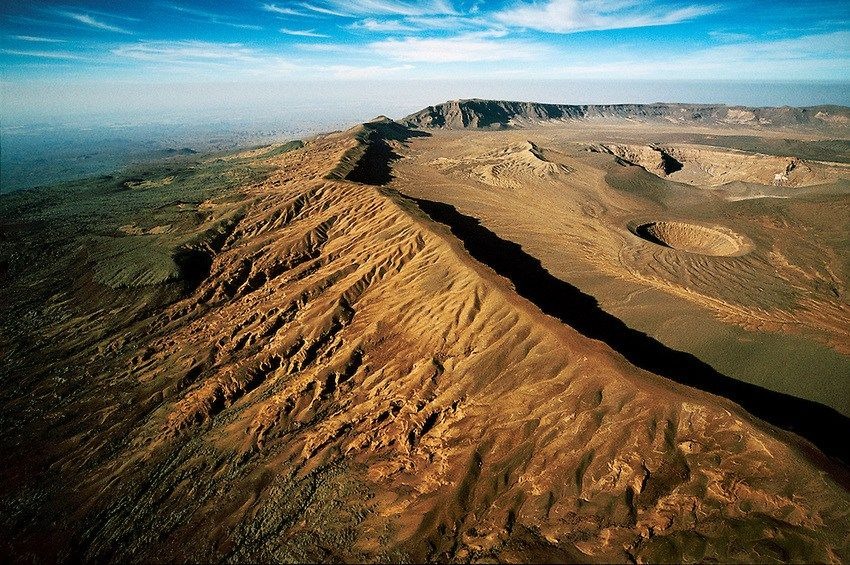
The Ennedi plateau, in northeastern Chad, is a sandstone massif sculpted by erosion in the heart of the Sahara. Inscribed as a UNESCO World Heritage site in February 2016, it is home to monumental arches, guelthas (semi-permanent water basins), thousands of rock paintings and engravings, as well as remarkable Saharan fauna and flora. Located approximately 950 km from N'Djamena, this massif is one of the most emblematic sites in Central Africa.
Why visit the Ennedi plateau
- A UNESCO-listed site since 2016 for its natural and cultural values.
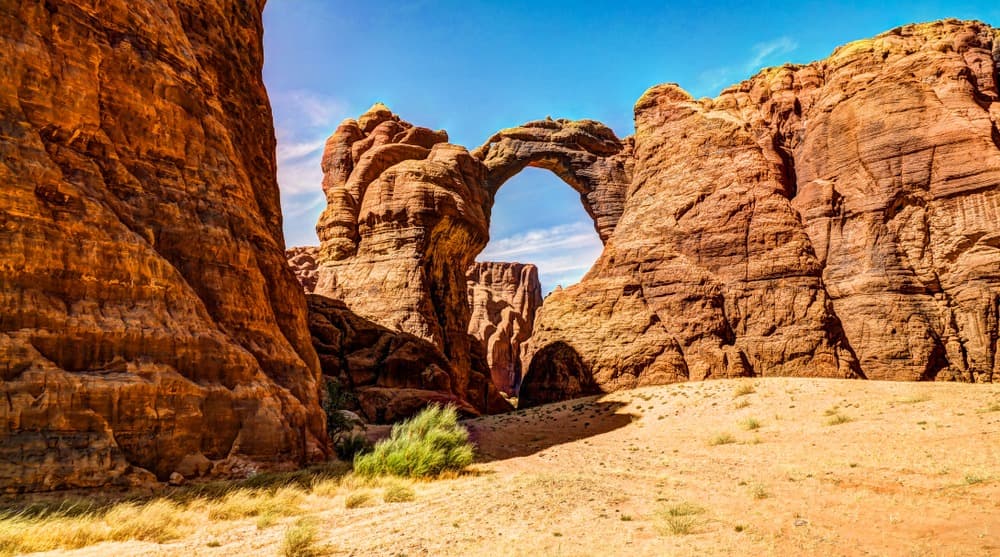
- Eroded sandstone landscapes: arches, peaks, mineral labyrinths stretching across tens of thousands of km².
- Spectacular guelthas, including the Archei guelthas, refuge of the last desert crocodiles in the Sahara.
- Dense rock art heritage (paintings and engravings) dating back several millennia.
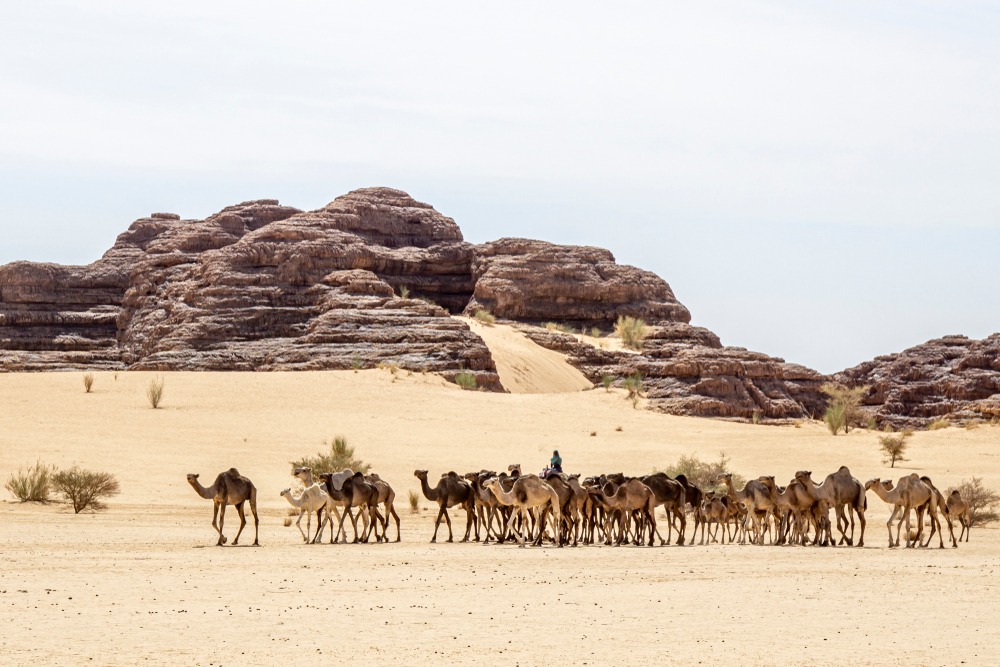
- Encounters with the Toubou, a semi-nomadic pastoral people of the mountains in northern Chad.
History of the massif
A thousand years of occupation
Wind erosion and the Sahara's thermal variations have shaped this sandstone massif over several million years. The region was inhabited by hunter-gatherers around 5,000 BC, then by pastoralists from 4,000 BC onwards. The rock paintings and engravings covering rock shelters bear witness to this continuous occupation: hunting scenes, cattle herds, camels and stylized human figures.
International recognition and management
The Ennedi plateau was inscribed as a UNESCO World Heritage site in February 2016, for its mixed values (natural and cultural). In 2018, management of the site was entrusted to the NGO African Parks, in partnership with the Chadian government. In January 2019, the Ennedi Natural and Cultural Reserve was officially established and covers approximately 50,000 km², making it one of Africa's largest protected areas.
What to see on the plateau
The guelthas
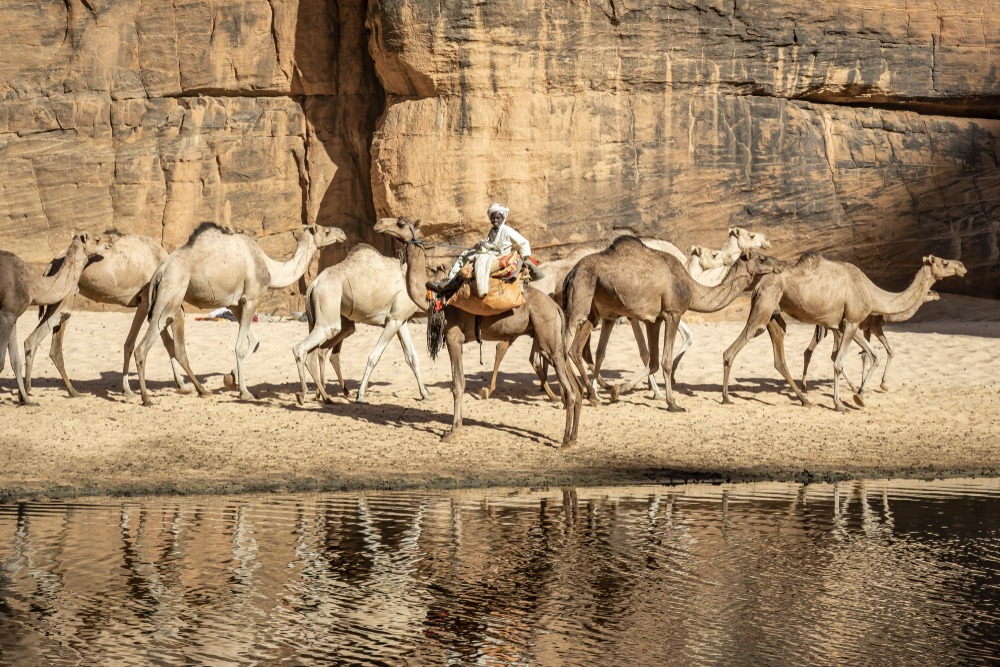
Guelthas, water basins fed by rare rainfall and groundwater reserves, are the vital points of the massif. Bachikélé guelthas, bordered by doum palms, attract residents from neighbouring villages, herds and wild fauna. Archei guelthas, nestled in a deep canyon, is the main water supply point for the entire region. Its brackish, dark waters harbour a small population of Crocodylus suchus, the desert crocodile (sometimes confused with the Nile crocodile): these are the last surviving members of the species in the Sahara.
Arches and rock formations
The massif contains hundreds of natural arches. Julia's arch, slender and elegant, is one of the most photographed. Peaks, towers and labyrinths of ochre sandstone form a mineral maze where one travels from camp to camp on foot, by 4x4 or camel back.
Rock paintings and engravings
Following the wadis upstream from Archei guelthas, you pass rock shelters adorned with paintings depicting camels, riders, hunting scenes and cattle gatherings. The Terkei site stands out for a large cow engraved directly into the rock, one of the Ennedi's best-known rock art works.
Fauna and flora
More than 525 plant species have been recorded in the reserve, including several endemic species. The massif is also a migration crossroads for nearly 200 bird species. Among mammals, you can observe striped hyenas, caracals (sometimes called desert lynx), baboons, honey badgers, dorcas gazelles, patas monkeys and Barbary sheep. Several species, however, have disappeared due to poaching in the mid-20th century: dama gazelle, oryx gazelle, addax and Slender-horned gazelle.
The Toubou people
The Toubou, semi-nomadic pastoralists, occupy the Ennedi and neighbouring massifs. They move according to pasture availability and set up large round tents made from mats woven from doum palm leaves. Their camps dot the itinerary and offer a glimpse into pastoral life adapted to an extreme environment.
Practical information
- Guided visits within the reserve are mandatory, with a local guide and authorisation.
- Typically plan for around ten days on site to cover the main sites by 4x4.
- Accommodation in bivouacs under canvas, around a campfire.
- Bring warm clothing (cold nights in the dry season), sun protection, plenty of water, personal medications.
When to visit
The best period extends from October to March, when daytime temperatures become bearable (often 25-32 °C) and nights are cool. Between April and September, temperatures frequently exceed 40 °C and expeditions are not recommended.
How to get there
Two main routes allow you to reach Ennedi from N'Djamena:
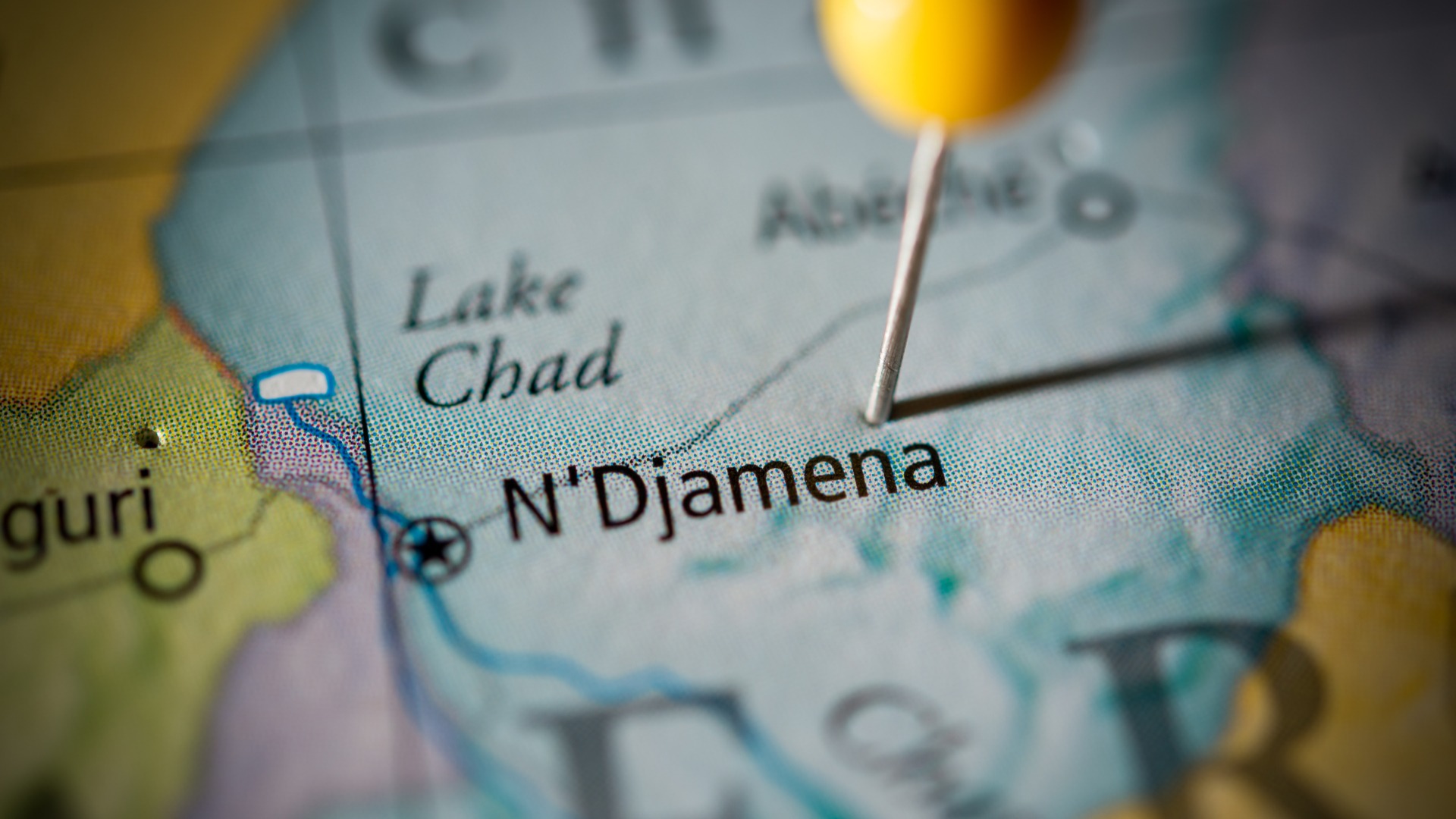
- By road: N'Djamena → Abéché (expect a full day by bus, longer depending on track conditions), then 4x4 to Goz-Bila, Kalaït and the massif entrance. Count on 2 to 3 days of travel in total.
- By air: internal flight to Faya-Largeau, then 4x4 connection with local guides. This option significantly reduces transfer time.
In all cases, the journey is conducted as part of an organised expedition, with all-terrain vehicles, crew and guides.
What to see in the region
- Archei guelthas: the emblematic site of the massif, refuge of the desert crocodiles.
- Ounianga Lakes: another UNESCO site in Chad, a collection of Saharan lakes with striking colours.
- Emi Koussi: the highest peak in the Sahara, in the Tibesti massif.
Frequently asked questions
Frequently asked questions
No. Visits must take place as part of an organised expedition with a local guide and authorisation, due to remoteness, climatic conditions and site management by African Parks.
A complete expedition typically lasts 10 to 15 days, including transfers from N'Djamena. To enjoy the main sites (guelthas, arches, rock paintings), plan for at least a week on site.
Yes. Archei guelthas is home to a small population of Crocodylus suchus (desert crocodile or West African crocodile), the last representatives of the species in the Sahara, isolated since the region's progressive drying.
A warm sleeping bag for nights, light covering clothing for the day, shemagh, sunglasses, sunscreen, head torch, hiking boots, water bottle and personal first aid kit.
October to March, during the cool dry season. Daytime temperatures remain moderate and nights are bearable. Avoid the April-September period, which is too hot.
Plan your trip
The Ennedi plateau is best discovered as part of a guided expedition through northern Chad. To build a bespoke itinerary combining Ennedi, Ounianga and Tibesti, consult our trips to Chad.
Interested in this visit?
We can include it in your personalised itinerary.