Ounianga Lakes
Ounianga Lakes
In northern Chad, the Ounianga Lakes form a cluster of 18 permanent lakes in the heart of the Sahara, designated a UNESCO World Heritage Site in 2012.
Chad's first natural site inscribed on the UNESCO World Heritage List in 2012, the Ounianga Lakes form a collection of 18 permanent lakes in the heart of the Sahara, in the far north of the country. Hydrological remnants from a time when the desert was humid savanna, they represent one of Africa's most singular geographical phenomena.
Why visit the Ounianga Lakes
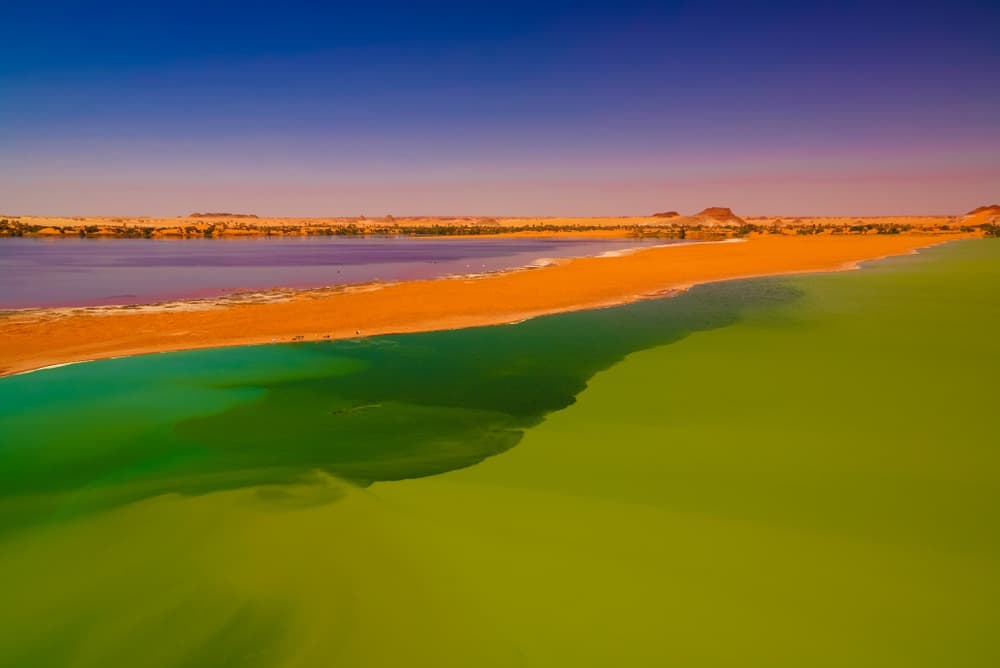
The site stands out for a rare combination: permanent lakes in the midst of hyperarid desert, contrasting water colors (from deep blue to spirulina green), shifting dunes that sculpt the shorelines, and a Toubou population that maintains traditional activities around the basins. For travelers interested in geology, extreme environment ecology, or off-the-beaten-path Saharan landscapes, Ounianga remains one of Chad's most memorable sites, ideally paired with the Ennedi plateau in the same itinerary.
History and formation
Between 5,000 and 10,000 years ago, the Sahara experienced a humid period. Rivers descending from highlands fed geological depressions and formed a vast lacustrine network, amid savanna environments. With progressive climatic shift, almost all of these water bodies evaporated. The Ounianga Lakes are among the rare survivors: they persist thanks to enormous fossil groundwater reserves that continuously compensate for surface evaporation.
The Toubou are the principal inhabitants of this region. Although their historical refuge was the Tibesti massif, they once controlled the commercial routes of central-eastern Sahara. Archaeological excavations confirm ancient human presence around the site.
What to see on site
The site covers a total area of 20 km² and divides into two distinct clusters.
Ounianga Kebir and Lake Yoa
To the west, Ounianga Kebir is home to Lake Yoa, both the deepest and the one holding the greatest volume of water of all desert lakes. A saline lake, it is the subject of traditional exploitation: on its shores, spirulina is cultivated for its protein richness, and inhabitants harvest soda and salt. The village of Ounianga Kebir extends along the shoreline.
Ounianga Serir and Lake Teli
To the east, Ounianga Serir groups together 16 basins separated by tongues of sand. The site originally formed a single freshwater lake before moving dunes fragmented it over centuries. Lake Teli, the principal basin, equals roughly 600 football fields. Lake Katam, nearby, is itself divided by a tongue of sand: the differing spirulina concentration gives the water blue color on one side and green on the other, a striking contrast from the heights.
Fauna and flora
Despite aridity, the ecosystem remains alive. Mammals observed include the Cape hare, fennec fox, jackal, dorcas gazelle, and spotted hyena. For birdlife, the lakes welcome waterfowl and nesting species: white pelican, marbled teal, Cape teal, flamingo, as well as blackcap (Sylvia atricapilla), chiffchaff, pied crow, and turtle dove. Lake Teli, isolated, harbors an original fish population: carp, catfish, Nile perch, and red cichlid.
Shoreline vegetation combines two-spiked sedges, broom reeds, Cape cattails, and doum palms, which have replaced date palms. Floating reeds carpet portions of the water surfaces.
The lakes' mechanism
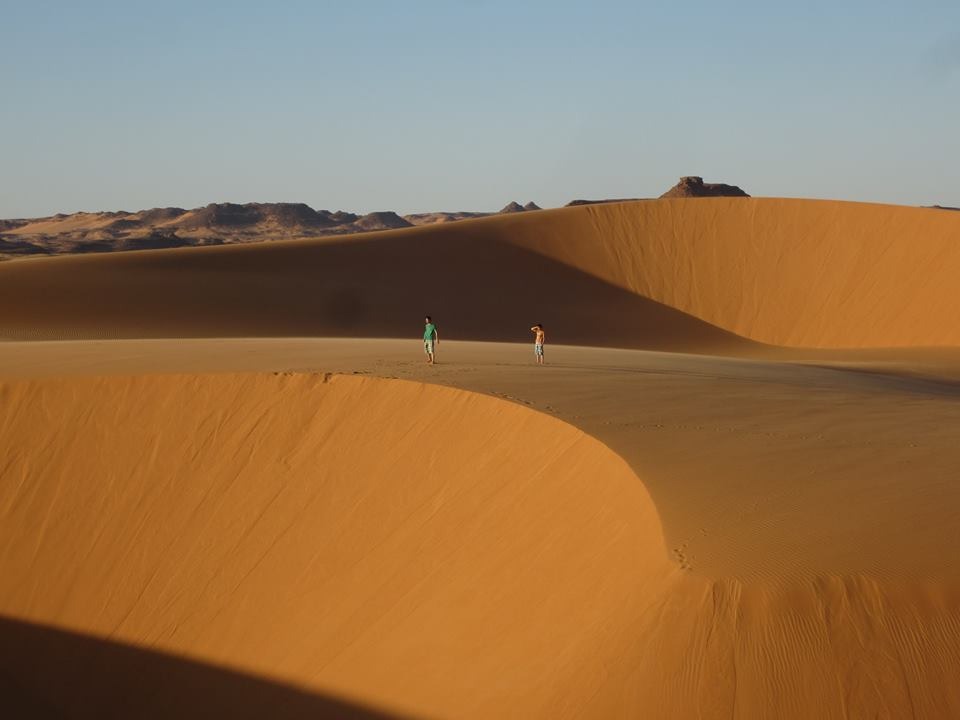
Northeast trade winds sweep the region permanently. By accelerating surface evaporation, they paradoxically cool the water, which displays an average temperature of 17 °C. In depth, groundwater reserves continue to feed the basins. Around them, wandering dunes advance year after year, some spilling into the lakes, others forming these characteristic sand tongues of the landscape.
Practical information
- Status: UNESCO site since 2012, Chad's first inscribed natural site.
- Area: 20 km².
- Guidance: visits are mandatory with a local guide and adapted 4×4 vehicle.
- On-site transportation: 4×4 to reach viewpoints, walking around basins, sometimes camel with the Toubou.
- Accommodation: tent camp, sometimes bivouac. Basic comfort to expect.
- To bring: complete sun protection, covering clothing, large quantities of water, warm clothing for nights.
When to go
The climate is hyperarid: rainfall rarely exceeds 2 mm per year, average temperature hovers around 26 °C, with maximums potentially reaching 46 °C and minimums around 13 °C. Northern winds blow much of the year.
The most comfortable window falls between November and February, when daytime temperatures remain manageable and cooler nights allow for good sleep. The months from April to September are discouraged due to extreme heat.
How to get there
Access to Ounianga requires serious logistics. The nearest city is Faya Largeau, an oasis located approximately 790 km northeast of N'Djamena. Faya has a small airport with irregular connections to the capital.
Two options dominate:
- Domestic flight to Faya Largeau then 4×4 convoy to the lakes (approximately one day's drive). The fastest solution.
- Overland route from N'Djamena by 4×4 convoy, allow several days, often combined with Ennedi.
In all cases, the site is visited only as part of an organized trip with an agency holding permits and proven logistics (fuel autonomy, water, GPS navigation).
Nearby
Northern Chad's region concentrates other major sites, usually integrated into the same circuit:
- The Ennedi plateau: sandstone massif with monumental arches and rock paintings, also UNESCO-listed.
- Guelta d'Archei: canyon sheltering one of Sahara's last crocodile populations.
- Emi Koussi: Sahara's highest point, dormant volcano in the Tibesti massif.
Frequently asked questions
Frequently asked questions
Either by domestic flight to Faya Largeau (approximately 790 km northeast of the capital), followed by one day's 4×4 drive, or by overland convoy from N'Djamena, which requires several days. Visits are mandatory with a local agency operating a 4×4 vehicle and experienced guide.
November to February, when daytime temperatures become manageable. The rest of the year, heat can exceed 45 °C, making logistics very challenging.
The security situation in northern Chad evolves. Travel must be undertaken with an approved local agency, in convoy, and by following authorities' guidelines. Consult official recommendations before departure.
Swimming is possible in certain freshwater lakes like Teli, but others are saline or have high spirulina concentration. Follow your local guide's directions.
Plan your trip
The Ounianga Lakes naturally integrate into a broader circuit in Chad's Saharan north. To prepare your itinerary, consult our bespoke Chad journeys.
Interested in this visit?
We can include it in your personalised itinerary.